
REVIEW · WWI BATTLEFIELD TOURS
World War I Private Tour from Brussels
One day can feel like ten years. This private World War I tour from Brussels links the Ypres front line to major memorials, with time at the Passchendaele 1917 Museum and several cemeteries that hit hard. I like how the plan keeps you moving site to site without feeling rushed, while still building in chances for reflection. The main drawback is simple: it is a long, emotionally heavy day, and there is no way around the walking on uneven grounds and outdoors.
I also appreciate the human touch. In one shared experience, the guide Nikolai helped a family track down burial sites for relatives in the German cemeteries, and that kind of care turns a history trip into something deeply personal. If your day ends in time, you can also catch the Last Post Ceremony at Menin Gate at 8 PM, a daily ritual that adds real weight to what you just learned.
Finally, it is built for comfort and flexibility. You get an air-conditioned vehicle, WiFi on board, bottled water, and tablet entertainment, plus pickup from the airport, hotel, station, port, or a custom address. Still, with a group limited to up to 3 people, you will want to book early if you have specific timing needs.
In This Review
- Key things that make this WWI day trip work
- Entering the Western Front from Brussels, one site at a time
- Getting picked up with comfort, not chaos
- Stop 1: Ieper (Ypres) and the In Flanders Fields Museum
- Stop 2: Menin Gate Memorial and the Last Post Ceremony at 8 PM
- Stop 3: Tyne Cot Cemetery, the names of the missing
- Stop 4: Passchendaele 1917 Museum, trench warfare you can picture
- Stops 5 to 9: German and Allied cemeteries plus the trench sector sites
- Vladslo German War Cemetery and The Grieving Parents
- Flanders Field American Cemetery
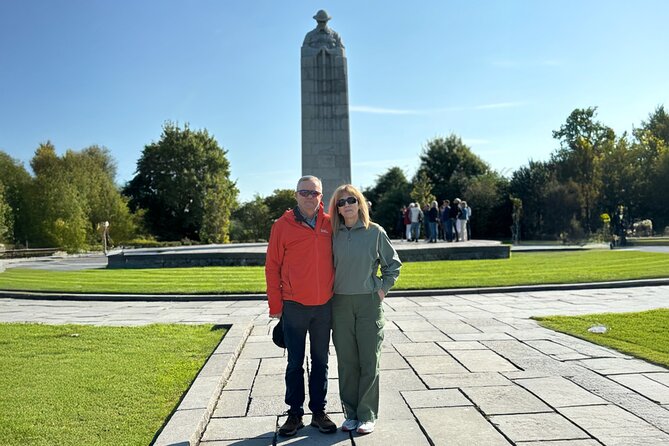
- Saint Julien Memorial and the Brooding Soldier
- Hooge Crater Museum and underground mine explosions
- Polygon Wood Cemetery
- Stop 10 to 11: Sanctuary Wood trenches and Essex Farm’s medical story
- Sanctuary Wood Museum (Hill 62) and the visible trenches
- Essex Farm Cemetery and In Flanders Fields
- Price and what you actually get for about 8 to 10 hours
- Who this WWI private tour suits best
- Should you book this private WWI tour from Brussels?
- FAQ
- How long is the World War I private tour from Brussels?
- How many people are in a group?
- Is this a private tour or shared with other travelers?
- What language is the tour offered in?
- Is pickup included, and where can you be picked up?
- Are entrance tickets included?
- Is there WiFi and bottled water on board?
- Is there an option for a child car seat?
- What is the cancellation policy?
Key things that make this WWI day trip work
- Private group format: You travel with just your party, so the guide can slow down for questions and special interests.
- Guide Nikolai, hands-on storytelling: The feedback highlights his ability to connect the sites to real people, not just dates.
- Passchendaele 1917 Museum is included: You get the one museum stop where admission is explicitly included in the tour.
- Cemeteries plus trenches, not just monuments: You see the names, the graves, and the surviving trench context around the Ypres area.
- A mix of national perspectives: German, Canadian, British and Commonwealth, and American commemoration all show up in one route.
- Menin Gate Last Post at 8 PM (if timing fits): It is optional depending on when the tour finishes, but it can be a standout moment.
Entering the Western Front from Brussels, one site at a time
A private tour like this is useful because the Western Front is not one place. It is a chain of towns, trenches, and memorials, all tied to a region that still bears the scars. When you start with Ypres and then work outward, you get a cleaner story arc, instead of jumping around on your own and guessing what matters most.
I like that this day is organized like a sequence of “proof points.” You begin with a museum in the historic center, then you move to a major memorial (Menin Gate), then to cemeteries and trench sites across the Ypres sector. That structure helps you connect what you learn with what you see.
It also keeps the day manageable. At a glance, the stops look numerous, but most are 30 to 60 minutes, and the day includes built-in time breaks, like a short pause for lunch in Ypres. In other words, you are not just stuck in a van staring at the clock.
More Flanders Fields battlefield tours:
- Flanders Fields Remembrance Tour from Brussels
★ 4.5 · 334 reviews - Private World War I Battlefield Tour from Brussels to Flanders
★ 5.0 · 8 reviews - Flanders World War I Battlefields Private Tour from Brussels
★ 4.5 · 4 reviews
Getting picked up with comfort, not chaos
This is a full-day trip that runs about 8 to 10 hours, so logistics matter. The operator offers pickup from many locations, including the airport (driver waits in the arrival hall with a sign), hotels (at the entrance or reception), train stations (main exit with a sign), ports (main terminal exit), or a custom address you provide. That reduces the “where do we meet” stress that can ruin the first 30 minutes of a trip.
On board, you get an air-conditioned vehicle, WiFi, bottled water, and tablet entertainment. There is also a professional photo and video service included, and child car seats are available if needed. If you care about staying comfortable, especially in colder or wet months, those details add up.
One more practical note: tickets are mostly free where listed, and you have a mobile ticket. That means you spend less time at desks and more time at the sites themselves.
Stop 1: Ieper (Ypres) and the In Flanders Fields Museum
Ieper, also known as Ypres, is the right opening act. It is the symbolic heart of the Western Front, and starting here gives you the map in your head before you walk into the memorial sites.
The In Flanders Fields Museum is the anchor of this first stop. The focus is on interactive exhibits and personal stories that explain World War I through human experiences, not just big-picture dates. You also get about 2 hours for this part, with time for a short break or lunch before you continue.
Why this stop matters: once you understand what life looked like at the time, the later cemeteries and monuments hit harder in a good way. You are no longer reading names as abstract facts.
Stop 2: Menin Gate Memorial and the Last Post Ceremony at 8 PM
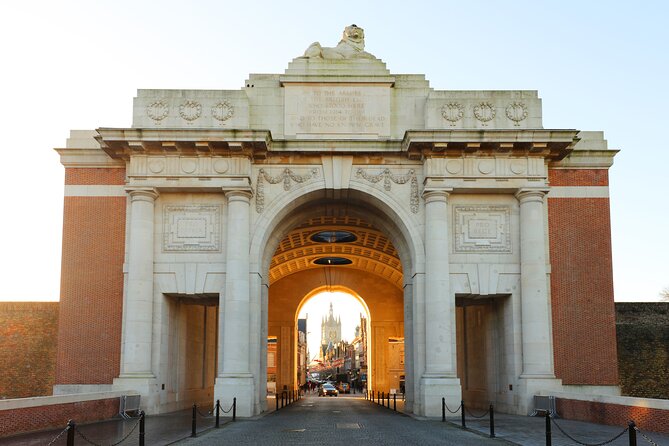
Menin Gate Memorial to the Missing is one of the most important World War I monuments in Belgium. The guide explains its significance and the names engraved on its walls, and that guided reading is key. Standing in front of a memorial like this is powerful, but context helps you understand why it was built and what “the missing” means for families.
There is an optional highlight depending on timing. If your tour ends in the evening, you can witness the Last Post Ceremony at 8 PM. Even if you are not a big ceremony person, it works because it is simple, daily, and connected to the memorial itself.
Practical thought: this stop is about an hour, so if you want time to look closely at specific names, it helps to tell your guide early. A private format makes that easier.
More day trips leaving Brussels:
- From Brussels: Guided Day Trip to Bruges and Ghent
★ 4.6 · 8,353 reviews - From Brussels: Bruges & Ghent Day Tour – 2 Fairytale Cities
★ 4.7 · 8,242 reviews - Bruges and Ghent – Belgium’s Fairytale Cities – from Brussels
★ 4.0 · 4,809 reviews - Luxembourg and Dinant Day Trip from Brussels
★ 4.0 · 1,474 reviews
Stop 3: Tyne Cot Cemetery, the names of the missing
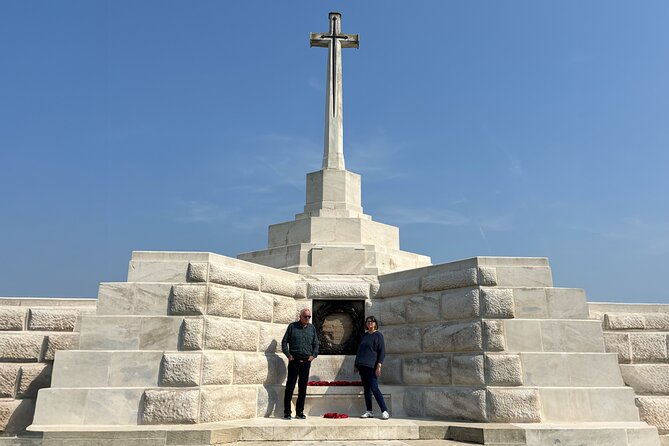
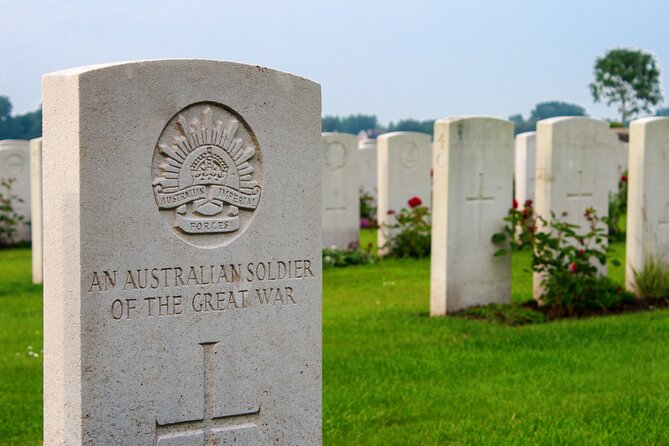
Tyne Cot Cemetery is the largest Commonwealth military cemetery in the world. Near Passchendaele, it holds nearly 12,000 soldiers, and the wall inscribed with the names of the missing is the signature feature.
This is a 45-minute stop, and that time can feel short, but it is enough for a guided tour plus some quiet scanning. What I like is how the route connects Tyne Cot to Commonwealth memory through stories your guide shares, including references to the UK, Australia, Canada, and New Zealand.
If you are visiting because of family history, cemeteries like this are often where your questions stop being theories. They become very real.
Stop 4: Passchendaele 1917 Museum, trench warfare you can picture
This is the stop where the tour’s museum time is explicitly the one included admission. The Memorial Museum Passchendaele 1917 focuses on the brutal reality of trench warfare.
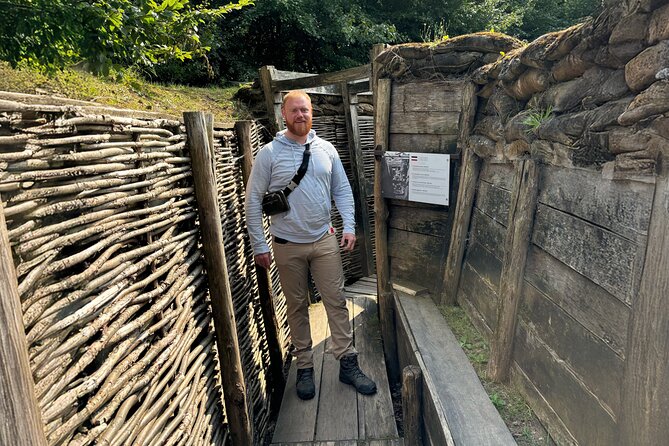
You will explore reconstructed trenches, interactive exhibits, and authentic artifacts. That combination helps you build a mental picture of how fighting happened day after day, and why the terrain mattered so much.
One caution: this part can be emotionally intense. Even without graphic imagery spelled out here, it is hard to learn about trench conditions without feeling the pressure in your chest. Give yourself a moment before you head back to the road, even if it is just to take a few breaths.
Stops 5 to 9: German and Allied cemeteries plus the trench sector sites
A strength of this route is that it does not keep to one side or one country. After the Passchendaele area museum, you move into sites that widen the perspective.
Vladslo German War Cemetery and The Grieving Parents
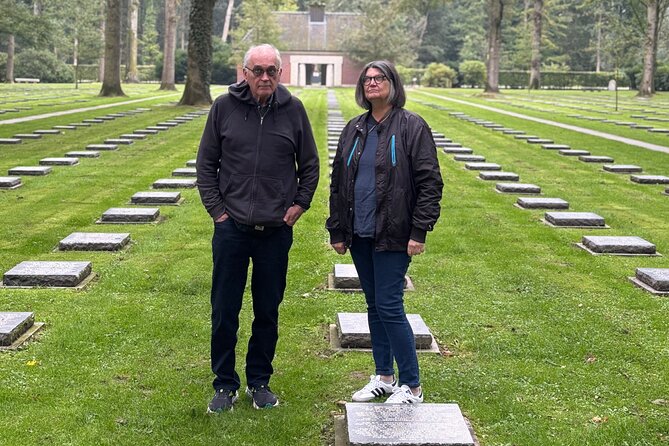
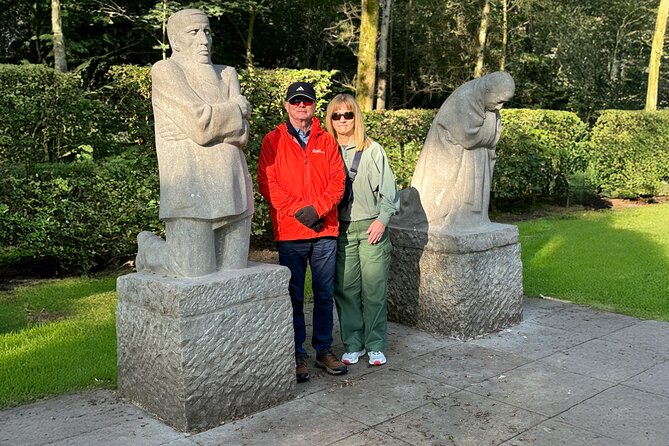
Vladslo German War Cemetery is the final resting place of over 25,000 German soldiers. It is known for the sculpture The Grieving Parents by Käthe Kollwitz, created in memory of her own son, Peter, who died in battle.
This is a 30-minute stop, and it is designed for reflection. I like that it broadens the story, because the human cost of war is not owned by any one side.
Flanders Field American Cemetery
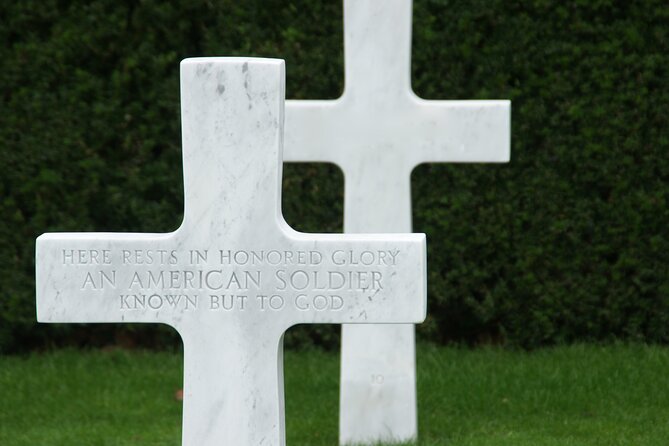
This is the only American World War I cemetery in Belgium. The site honors 368 fallen American soldiers and includes a chapel with stained glass and engraved maps.
It is also a 45-minute stop, which gives you time to slow down and read the details. Quietly maintained cemeteries can feel less dramatic than big monuments, but that is often why they linger in your memory.
Saint Julien Memorial and the Brooding Soldier
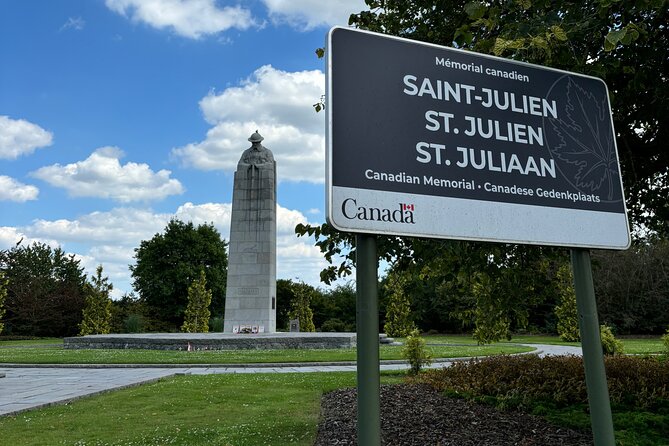
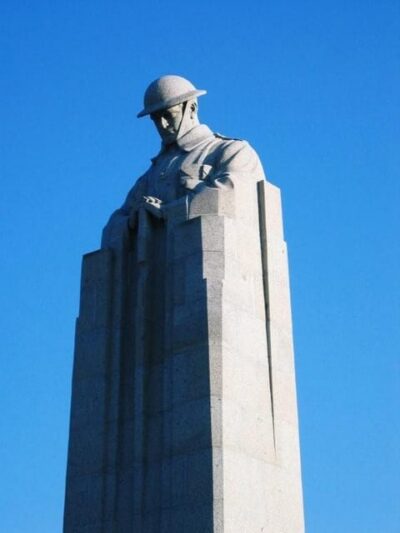
Saint Julien Memorial marks the site where poison gas was first used on the Western Front. The monument includes the statue of the Brooding Soldier, honoring Canadian troops who held the line during the Second Battle of Ypres in 1915.
You get about 30 minutes here. For many visitors, this is the point where the history becomes less about battlefield strategy and more about the fear and suffering that changed warfare forever.
Hooge Crater Museum and underground mine explosions
Hooge Crater Museum covers mine explosions used in trench warfare. The area changed hands multiple times and became one of the most heavily contested sectors near Ypres.
This stop is about 30 minutes. It is a reminder that in World War I, the ground itself was a weapon, not just a backdrop.
Polygon Wood Cemetery
Polygon Wood was the site of intense fighting during the Third Battle of Ypres in 1917. Today it is a peaceful forest with cemeteries and memorials honoring soldiers from several nations who fought and fell here.
This is another 30-minute stop. It can feel strange at first, seeing a quiet place where people once fought so violently. That contrast is part of what makes the war feel close to the present.
Stop 10 to 11: Sanctuary Wood trenches and Essex Farm’s medical story
This final stretch keeps the day grounded in trench reality and in how people tried to survive.
Sanctuary Wood Museum (Hill 62) and the visible trenches
Sanctuary Wood Museum includes Hill 62, one of the rare places where original WWI trenches are still visible today. The ridge was fought over because it provided commanding views over Ypres and surrounding battlefields.
You get about 30 minutes. If you only choose one trench-related “see it with your own eyes” moment, this is the one that leans most on surviving trench traces.
Essex Farm Cemetery and In Flanders Fields
Essex Farm Cemetery connects the war to a specific voice. It is the site where Canadian doctor John McCrae wrote In Flanders Fields.
The cemetery includes original bunkers and field dressing stations, which gives you the medical side of World War I. This stop is about 30 minutes, and it helps balance the day by shifting from combat to care, paperwork, triage, and the limits of medicine at the time.
Price and what you actually get for about 8 to 10 hours
The listed price is $962.09 per group, up to 3 people. That can sound steep until you convert it into what you are buying: a private guide, a full route across multiple memorials and sites, and a driver handling pickups and transport through the Ypres area.
If you travel as two or three people, your per-person cost drops quickly. If you are solo, it is still a premium day, but you are paying for the private format and the fact that most of the key sites on this route involve more than just getting out and snapping photos.
Also note that admissions are listed as free for many stops, and Passchendaele 1917 Museum admission is included. That reduces surprise costs once you are in Belgium.
My practical advice: treat this as a “curated day, but with freedom.” You are not locked into a theme park schedule. You can ask your guide about what you care about, especially if you have specific burial locations in mind.
Who this WWI private tour suits best
This tour fits best if you want more than a quick checklist. You will enjoy it if you like guided context, name and story details, and the chance to connect memorials with trench sites in one logical loop.
It is also a strong choice for people with family connections. One shared experience highlighted how the guide Nikolai helped make a burial-site search successful in German cemeteries, and that kind of attention matters when you are trying to do something meaningful, not just learn facts.
On the other hand, if you want a light, casual day with minimal walking and minimal emotion, this route may feel intense. The sites are designed for remembrance, and the subject matter does not allow “turn down the volume.”
Should you book this private WWI tour from Brussels?
Yes, if you want a focused, guided World War I day that covers both the big memorials and the quieter cemeteries, with trench context that helps everything click. I also think it is a smart value when you split the group price, because you are getting transportation, pickup flexibility, and a private guide for the whole run.
Book it especially if you care about the details, like the names on memorial walls, the stories behind specific monuments, and the way different countries remember the same war. The route does a good job of balancing perspectives, and the guide support shown in the feedback (including Nikolai and a smooth driving day with Theo) is exactly what you want when the stakes are emotional.
FAQ
How long is the World War I private tour from Brussels?
It runs about 8 to 10 hours.
How many people are in a group?
The tour is priced per group for up to 3 people.
Is this a private tour or shared with other travelers?
This is a private tour, so only your group participates.
What language is the tour offered in?
The tour is offered in English.
Is pickup included, and where can you be picked up?
Pickup is offered for airports, hotels, train stations, ports, and custom locations you provide. The driver meets you with a sign at the specified place.
Are entrance tickets included?
Most listed admission tickets are free, and the Memorial Museum Passchendaele 1917 admission is included.
Is there WiFi and bottled water on board?
Yes. WiFi is available on board and bottled water is included.
Is there an option for a child car seat?
Yes, child car seats are available.
What is the cancellation policy?
Free cancellation is available up to 24 hours in advance for a full refund. Changes made less than 24 hours before the start time are not accepted.
The latest Brussels write-ups
- Taxi DE Brussels to Zaventem Airport★ 5.0 · 3 reviews
- Taxi to Brussels National Airport DE Brussels★ 3.5 · 17 reviews
- Taxi Brussels Airport < - > Airport DE Charleroi (1 to 8 places)★ 3.5 · 3 reviews
- Standard vehicle from Brussels airport to city of Antwerp★ 5.0 · 4 reviews
- PRIVATE MPV TRANSFER FROM/TO BRUSSELS AIRPORT (Max 6 pax) ONE-WAY★ 5.0 · 4 reviews
- Luxury vehicle from Brussels airport to the city of Brussels★ 4.0 · 5 reviews
- Private transfer from BRU Airport to Brussels city with luxury limousine 3 pax★ 4.5 · 8 reviews
- Transfer Brussels Airport –> Brussels MB V Class 7 PAX (ONE WAY)★ 5.0 · 4 reviews
WWI Battlefield Tours, compared.
Great War Flanders Fields Minibus Tour w/ Lunch
Read our review →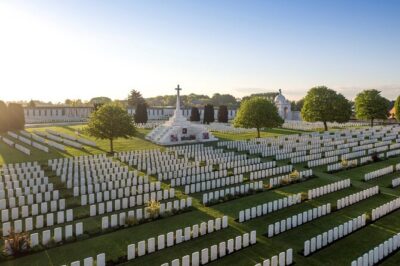
Flanders Fields Remembrance Tour from Brussels
Read our review →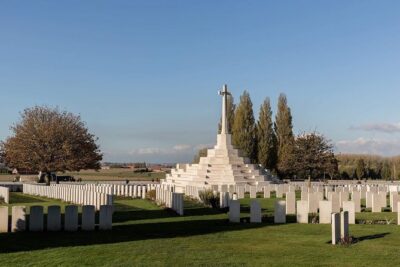
From IEPER Private 4-hour Tour of the Ypres Battlefield
Read our review →
In Flanders Fields and Passchendaele Half Day Morning Tour
Read our review →
From Ypres, The Christmas Truce to Passchendaele Ypres Based WW1 private tour
Read our review →
Browse the lists this tour appears in