
REVIEW · WWI BATTLEFIELD TOURS
From Ypres, The Christmas Truce to Passchendaele Ypres Based WW1 private tour
WWI sites you can feel in your feet. This private day links major WWI locations around Ypres and Passchendaele in a logical route, with a guide to explain what you are seeing and why it mattered. I also like the built-in comfort of free bottled water as you move from stop to stop.
You’ll get real satisfaction from the way the day is tailored. Based on how the guide works with groups, you can adjust the focus and depth, and you’ll learn both the battle story and the ground-level details you would easily miss on your own. Private, customizable pacing also helps if your group wants more time at a cemetery or less time at a drive-by.
One thing to consider: it is a full day with many short segments, and lunch isn’t included. If you get hungry mid-afternoon, you’ll want to plan your food around that.
In This Review
- Key points to know before you go
- Why This Ypres to Passchendaele Route Works Better With a Guide
- Private Tour, English Guide, and How Customization Helps Your Day
- Messines Ridge: Mine Craters, the Christmas Truce Scene, and the Hitler Crypt Stop
- Hooge Crater Cemetery, The Black Watch, and Polygon Wood’s Concrete Bunkers
- Hill 60 Tunnelling at 3.10am, Plus Broodseinde and Zonnebeke Drives
- Tyne Cot, John McCrae’s Hospital Site, and Menin Gate’s 55,000 Names
- Sanctuary Wood Museum: Original Trenches and a Quieter Ending
- Price and Logistics: What $420.49 Buys You
- Should You Book This Private WWI Day in Ypres?
- FAQ
- How long is the WW1 private tour from Ypres?
- What is included during the tour?
- Is lunch included?
- Is the tour private?
- Is pickup offered, and where does it start?
- What if I cancel?
Key points to know before you go
- A tight, WWI-focused route that moves from Messines Ridge to the Passchendaele fighting area and back through the Ypres Salient sites
- Free bottled water keeps you comfortable during long stretches on the move
- Most stops are free to enter, so your money goes into the guide time and the day itself
- A truly private group means you can ask questions and set the pace for your party
- Australia-focused interpretation shows up often, from gun pits to VC stories and monuments
- Sanctuary Wood Museum adds a quieter, trench-focused wrap-up with original trenches on view
Why This Ypres to Passchendaele Route Works Better With a Guide
The Ypres Salient is not a set of isolated monuments. It is a connected fighting system, where hills, ridges, and cemeteries line up with specific actions. When you move through the area with someone who can read the terrain for you, everything clicks faster, even if you only know the basics of WWI.
This tour is built around the logic of that battlefield geography. You start with Messines Ridge, move into the Passchendaele front area, and then end at the big memorial and cemetery sites that carry the long-term human cost. You also get short, purposeful stops, so you are not spending the day staring at plaques with no context.
The private format matters here. With a small group, you can ask follow-up questions on why one position mattered, how a battle unfolded, or how one cemetery is tied to a specific operation. That is the difference between seeing a site and actually understanding it.
More Flanders Fields battlefield tours:
- From IEPER Private 4-hour Tour of the Ypres Battlefield
★ 5.0 · 154 reviews - In Flanders Fields and Passchendaele Half Day Morning Tour
★ 5.0 · 117 reviews - From Ypres: WWI Battlefields Private Tour
★ 5.0 · 25 reviews
Private Tour, English Guide, and How Customization Helps Your Day
This is a private tour, meaning only your group is in the vehicle with the guide. You can expect a day that runs like a conversation with a plan, not a scripted bus tour.
It is offered in English, and the guide brings a local, place-based perspective from living in the area. In the feedback you were given, the guide (Søren is the name that shows up) is described as tailoring the day to the group’s interests and background. If your party has family connections, there is also evidence the guide is willing to connect stops to relatives, and to share extra reading or audio links after the tour.
You also get practical support built into the experience. Pickup is offered from Ieper based locations (with a minimum of two guests), and you’ll use a mobile ticket. The structure of the day, with bottled water included and a trench museum stop added, makes it easier to stay focused for the full duration.
Messines Ridge: Mine Craters, the Christmas Truce Scene, and the Hitler Crypt Stop
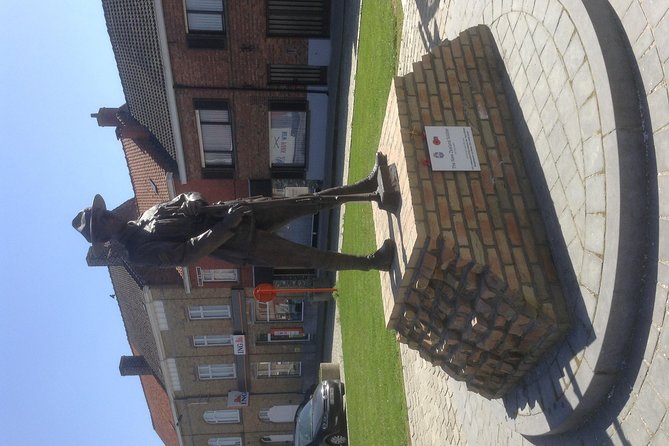
Your day begins at Messines Ridge, and that start point sets the tone. Here, you hear the story of the Battle of Messines, then you visit mine craters on the ground. The payoff is not just the dramatic terrain, it is the sense of how engineering and infantry actions were tangled together in 1917.
A standout moment is the visit tied to the Christmas Truce. Seeing the setting helps the story feel real, because the ground stops being a vague backdrop and becomes part of the moment. You also visit a crypt where Adolf Hitler was treated for his wounds. Even if you only know that name historically, the physical site makes the subject feel less distant and more specific.
This stop is listed as around 2 hours. That is enough time to take in the battle context, walk the relevant areas, and absorb the meaning behind the memorial elements without rushing.
Hooge Crater Cemetery, The Black Watch, and Polygon Wood’s Concrete Bunkers
Next, you move into the Passchendaele fighting zone with a sequence that keeps shifting from personal stories to strategic positions.
At Hooge Crater Cemetery, you visit the grave of Pat Bugden VC, described as the 20-year-old Victoria Cross recipient. You also stand on the Menin Road directly alongside where the Australian gun pits were for the assault on Passchendaele. Short as it is on the clock, this stop gives you a powerful combination: a named individual and the operational ground that surrounded him.
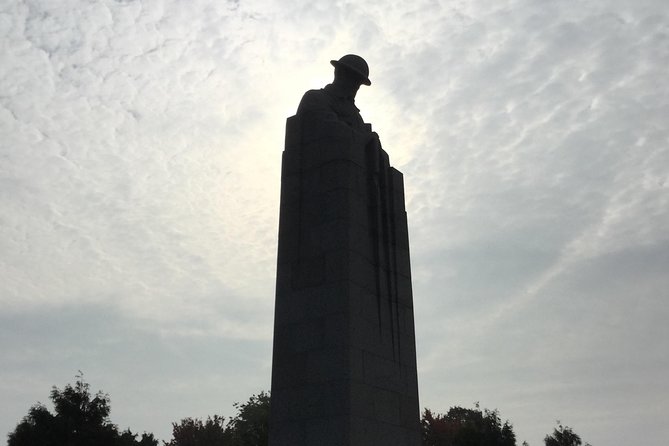
You then go to The Black Watch, a site connected to Australian HQ in September 1917. The guide also covers earlier actions from November 1914 on the same ground, which is important because the Salient did not flip from peaceful to apocalyptic overnight. It escalated and changed hands over time, and this stop helps you see that continuity.
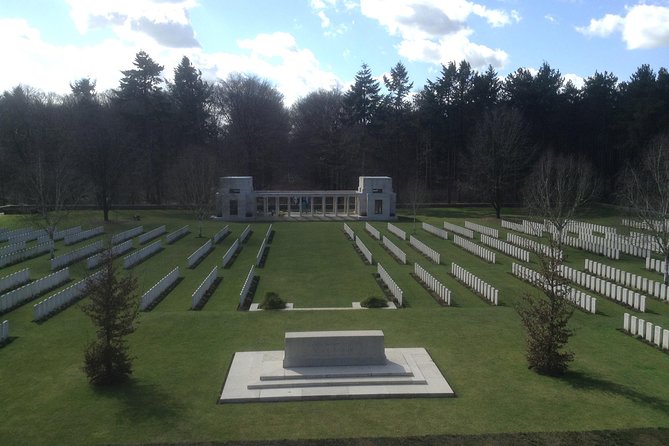
The day’s walking segment comes at Battle of Polygon Wood. You’ll move through the woods and see concrete bunkers that were here when Australian soldiers captured them. You also visit the cemetery and the Australian 5th Division monument. This stop is about 30 minutes, so I’d treat it like a walking target, not a long hike. If you can, wear shoes that handle uneven ground and keep your phone battery ready for photos, because the view lines in these woods can help you visualize old positions.
A few more Ypres outings worth a look
Hill 60 Tunnelling at 3.10am, Plus Broodseinde and Zonnebeke Drives
From Polygon Wood, the tour shifts underground and forward again, in a way that gives you balance. At Hill 60, you hear the story of Captain Woodward and the 1st Australian Tunnelling Coy. The key detail here is the mine event, a massive mine blown at 3.10am on 7 June 1917, with the crater still visible.
This is a stop that rewards attention. The tunnelling angle makes the WWI story feel less like only trenches and barbed wire, and more like a war of timing, engineering, and coordinated action. It also connects neatly to what you saw above ground at earlier sites, because the battlefield’s changes were often triggered by work you could not see until it went off.
After Hill 60, you drive through Broodseinde along the line of the Australian advance. The same idea continues at Zonnebeke, also along that advance line. These are driving stops, so you do not get the same walking time, but they help you keep your bearings. If you ever feel lost in a battlefield area, this is exactly the moment a guided route saves you.
Together, these stops keep the day moving while still reinforcing the bigger map of where Australian forces pushed, paused, and fought.
Tyne Cot, John McCrae’s Hospital Site, and Menin Gate’s 55,000 Names
The emotional weight increases as you head toward the major cemeteries and memorials, and Tyne Cot is where it becomes unmistakable.
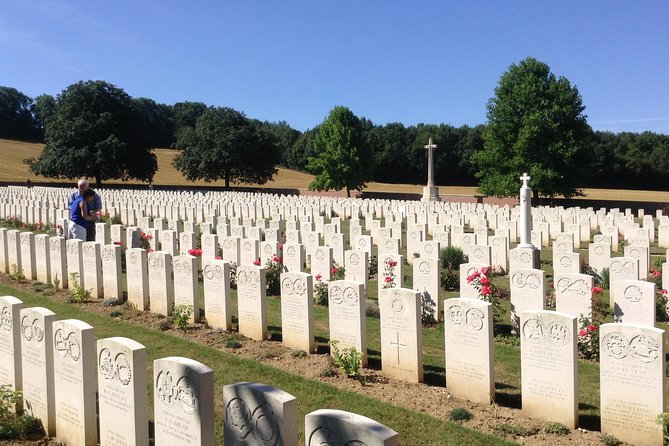
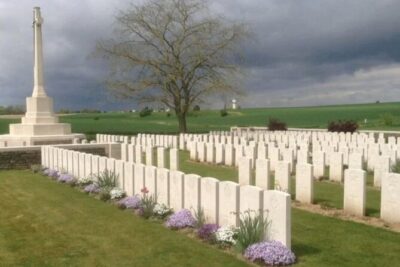
At Tyne Cot Cemetery, you visit the world’s largest Commonwealth War Graves Commission cemetery. The figures are stark: about 12,000 soldiers are buried here, and only around 3,000 have names. You’ll also find two Australian Victoria Cross recipients buried there. I like how the site forces you to slow down without needing extra explanation, because the scale does the talking. The guide’s job, here, is to connect the numbers and symbols to the human reality of those losses.
You then go to the John McCrae Site, the hospital location where Lt Col John McCrae composed the poem In Flanders Fields. This is one of those stops where the story shifts from battle mechanics to memory and meaning. Seeing the site helps you understand why the words stuck, because poetry becomes a practical way people tried to handle the unmanageable.
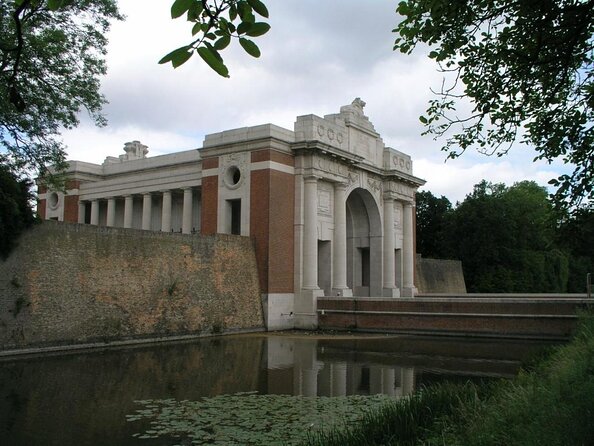
Finally, you reach Menin Gate Memorial. Here you hear how the memorial came about and the story behind the 55,000 names listed for those missing. It is quick on paper at about 20 minutes, but the impact is often larger than the time suggests. If your mind starts to wander, focus on the idea that each name stands for a person whose story did not end with a grave you could visit.
Sanctuary Wood Museum: Original Trenches and a Quieter Ending
To close the loop, the tour includes Sanctuary Wood Museum, where you get a different kind of encounter. It includes original WWI trenches and a small, “quaint” museum setting, with about 40 minutes allotted.
This is the part of the day I appreciate most when my brain is tired. The other stops can feel like big outdoor moments, cemeteries and monuments at scale. Sanctuary Wood gives you the sense of scale that is easier to digest, and it is also the first place in the day where the experience turns a bit inward.
Because the museum admission is listed as included, it is a low-friction stop too. You get something tangible beyond the driving and the open battlefield ground, and it helps you leave with a stronger mental picture of what trench life looked like, even if you never read a single book about it.
Price and Logistics: What $420.49 Buys You
At $420.49 per person for about 8 hours, you are paying for more than transportation. You are buying interpretation at 11 different stops, with a private guide who can tailor the day to your group and keep you moving without losing the meaning behind each location.
Several details strengthen the value. Bottled water is included, and most listed sites have admission marked free, which keeps the day from turning into a string of paid ticket lines. You also get pickup from select Ieper based hotels and a trench museum entry as part of the schedule.
The big trade-off is straightforward: since lunch isn’t included, you will likely need to handle food on your own. If you show up after a long morning commute or you prefer to eat during the day, this is the one budget item to think about early.
Also note the minimum group requirement mentioned for pickup and the fact it is designed for private groups. If you have flexibility on dates, booking ahead is smart, since the experience is commonly booked around 56 days in advance.
Should You Book This Private WWI Day in Ypres?
If you want a WWI tour that feels grounded in real battlefield logic, I think this one is a strong match. You will likely get the most out of it if you care about Australian roles, want a guided walkthrough instead of self-driving, or have personal family links you want to place into a bigger map of events.
I’d especially consider it if you are doing Ypres for the first time. The route takes you from Messines Ridge through the Passchendaele area to Tyne Cot and Menin Gate, so you do not just collect famous names. You understand how they connect.
On the other hand, if you dislike long days or you want a relaxed itinerary with a real lunch included, you might find the schedule a bit tight. It moves efficiently, but it still asks you to commit to a full morning and afternoon.
If your goal is one high-impact, guided WWI day that you can talk about afterward with specifics, this is the kind of experience that makes the region stop feeling like history and start feeling like geography and people.
FAQ
How long is the WW1 private tour from Ypres?
It runs for about 8 hours.
What is included during the tour?
Bottled water is included, and admission to the Sanctuary Wood Museum trench museum is included.
Is lunch included?
No, lunch is not included.
Is the tour private?
Yes. It is a private tour/activity, and only your group will participate.
Is pickup offered, and where does it start?
Pickup is offered from Ieper based locations only, with a minimum of two guests.
What if I cancel?
You can cancel for a full refund if you cancel up to 24 hours before the start time.
The latest Ypres write-ups
- From LIlle or Bruges, Christmas Truce to Passchendaele Ypres 1 day WW1 private★ 5.0 · 5 reviews
- Discover Tournai while playing! Escape game – The alchemist★ 4.0 · 3 reviews
- Full Day Canadian WW1 Vimy and Somme Battlefield Tour from Ypres★ 5.0 · 6 reviews
- e-Scavenger hunt Ypres: Explore the city at your own pace★ 4.5 · 6 reviews
- From Ypres 4hr Christmas Truce and Monster Mines of Messines PRIVATE Tour★ 5.0 · 5 reviews
- From Ypres: WWI Battlefields Private Tour★ 5.0 · 25 reviews
- Bellewaerde Aquapark Entrance Ticket★ 4.4 · 19 reviews
- Ypres: An exploration of the deadly salient battlefields★ 5.0 · 76 reviews
WWI Battlefield Tours, compared.
Great War Flanders Fields Minibus Tour w/ Lunch
Read our review →
Flanders Fields Remembrance Tour from Brussels
Read our review →
From IEPER Private 4-hour Tour of the Ypres Battlefield
Read our review →
In Flanders Fields and Passchendaele Half Day Morning Tour
Read our review →

Private WW1 Flanders Fields Battlefield Day Trip
Read our review →Browse the lists this tour appears in