
REVIEW · WWI BATTLEFIELD TOURS
Flanders Fields Remembrance Tour from Brussels
WWI sites in Flanders hit hard and human. This day trip from Brussels strings together major First World War memorial places with time for reflection, plus the evening Last Post at Menin Gate. I especially love how the stops connect emotionally and historically, from the Grieving Parents sculpture to Tyne Cot’s orderly graves. I also like having an expert guide on board for context you would not get wandering solo.
The main drawback is simple: this is a long day with lots of bus time and many stops. If you want a lighter schedule, or you struggle with frequent getting on and off a coach, plan carefully.
In This Review
- Key Highlights You Should Not Miss
- Why This WWI Remembrance Tour Works So Well From Brussels
- First Stop in Vladslo: Grieving Parents at the German Military Cemetery
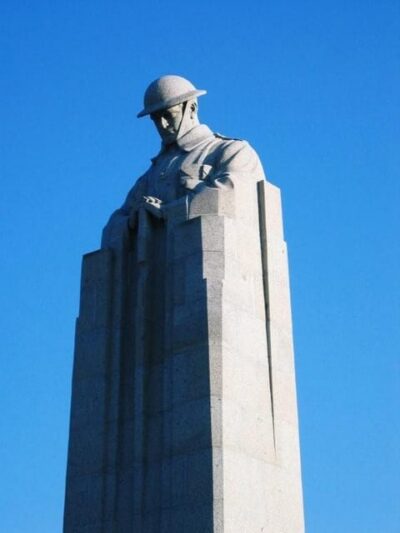
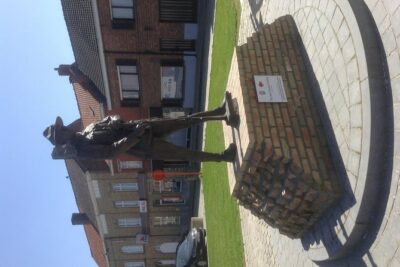
- Diksmuide’s Brooding Soldier and the Memory of Gas Warfare
- Flanders Fields Museum: Where the Tour Turns Into Real Understanding
- Passchendaele and Tyne Cot: Mud, Distance, and Scale
- Essex Farm and Hill 60: McCrae, Bunkers, and Tunnels
- Ypres in the Evening, Then Menin Gate at 8 pm
- What You Pay for 13 Hours of WWI Ground Truth
- Who This Tour Is Best For (and Who Should Rethink It)
- Final Call: Should You Book This Flanders Remembrance Tour?
- FAQ
- What time does the tour start, and how long is it?
- Where do I meet the tour, and where does it end?
- Is lunch included?
- What’s included in the tour price?
- Will I have free time during the day?
- Is the coach air-conditioned, and in what language is the tour offered?
- Do you pick up from hotels, and are pets allowed on board?
- Can I cancel for free?
Key Highlights You Should Not Miss
- Vladslo German Military Cemetery and Käthe Kollwitz’s Grieving Parents: a powerful way to start the day.
- The Brooding Soldier in Diksmuide: a dedicated reminder of a Canadian tragedy in the first gas attack.
- Flanders Fields Museum: guided storytelling that turns names on monuments into real human choices.
- Tyne Cot Commonwealth Cemetery: 35,000 graves, including British, Australian, and Canadian soldiers.
- Essex Farm and John McCrae’s In Flanders’ Field: the poem that helped shape remembrance.
- Menin Gate Last Post Ceremony at 8 pm: quietly moving, and a defining moment of the trip.
Why This WWI Remembrance Tour Works So Well From Brussels
If you only do one WWI outing from Brussels, this is the kind that changes how you read the memorial landscape. The value is not just the famous names. It is the pacing of ideas, moving from individual loss to larger battle geography, then ending with a daily public ritual.
The tour keeps things practical. You ride in an air-conditioned coach, the group size is capped at 100, and you get radios and earphones when needed. That matters, because you will spend hours with your head tilted toward history, not just staring out the window.
I also like that you get both sides of the memory, not only the Commonwealth cemeteries. Starting at a German military cemetery adds balance and makes the whole day feel less like a single-nation story. And when the day ends at Menin Gate, the emotion lands naturally after all that context.
More Flanders Fields battlefield tours:
- World War I Private Tour from Brussels
★ 5.0 · 8 reviews - Private World War I Battlefield Tour from Brussels to Flanders
★ 5.0 · 8 reviews - Flanders World War I Battlefields Private Tour from Brussels
★ 4.5 · 4 reviews
First Stop in Vladslo: Grieving Parents at the German Military Cemetery
You begin in Brussels at Bd de Berlaimont 18 around 9:15 am, then head into Flanders by coach. When you reach Vladslo German War Cemetery, you step into a space that feels intentionally quiet. The headliner is Grieving Parents, the sculpture by Käthe Kollwitz.
What hits you here is how the art does the talking. The sculpture does not explain history with dates. It communicates loss with posture, stillness, and a kind of grief that feels universal. It is a strong opener because it resets your brain before the day turns to battle maps and casualty numbers.
Practical tip: this is a moment for slow looking. Even if you are tempted to rush ahead for photos, give yourself time to stand back. From farther away, you get the full weight of the scene, and the meaning becomes clearer.
Diksmuide’s Brooding Soldier and the Memory of Gas Warfare
Next, you head to Diksmuide, where you will see the monument of the Brooding Soldier. The dedication is tied to the sacrifice of 2,000 Canadian soldiers during the first German gas attack.
This stop is short but purposeful. It bridges the gap between abstract war talk and a specific, human cost. Gas warfare is one of those topics people hear about in textbooks, but monuments like this make it feel immediate again.
What I like about including this stop is the way it widens your mental frame. The day is not only about where battles happened. It also shows how new weapons changed everything, including the way soldiers suffered and how communities remembered.
Flanders Fields Museum: Where the Tour Turns Into Real Understanding
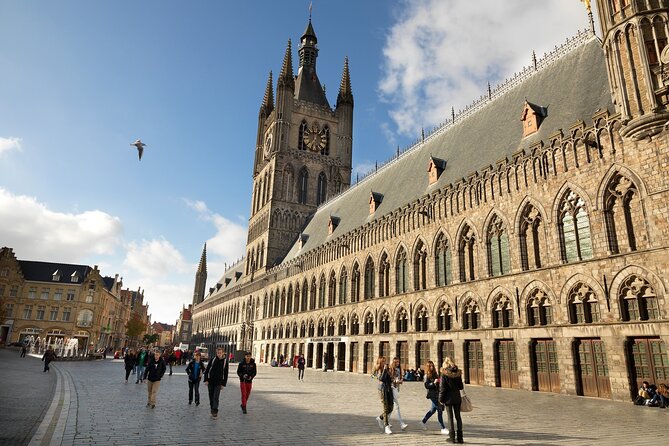
After a lunch break, you move on to Flanders Fields Museum. This is one of the best parts of the day because a museum gives structure to what you are seeing outside.
You should expect your guide to connect the events that led up to the First World War and then explain how the catastrophe unfolded. That guided layer is the difference between visiting cemeteries and actually understanding what they represent.
Why this museum stop is so valuable: when you later stand in places like Tyne Cot, you are not only looking at names. You can place those names into a story about occupation, trench warfare, and the long grind of living and dying in a shattered region.
Practical tip: since this is indoors, it is a good time to use the break to recharge. Bring a light layer if you run cold, because museum spaces can feel cooler even in good weather.
More day trips leaving Brussels:
- From Brussels: Guided Day Trip to Bruges and Ghent
★ 4.6 · 8,353 reviews - From Brussels: Bruges & Ghent Day Tour – 2 Fairytale Cities
★ 4.7 · 8,242 reviews - Bruges and Ghent – Belgium’s Fairytale Cities – from Brussels
★ 4.0 · 4,809 reviews - Luxembourg and Dinant Day Trip from Brussels
★ 4.0 · 1,474 reviews
Passchendaele and Tyne Cot: Mud, Distance, and Scale
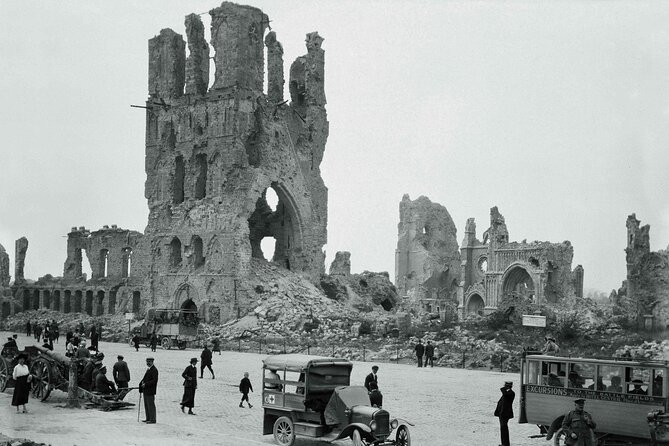
Then comes Passchendaele. You get time at the battlefield area, about 30 minutes in the schedule. This is not a “see everything” stop. It is a concentrated taste of how a battlefield can become both a memory site and a town in the same region.
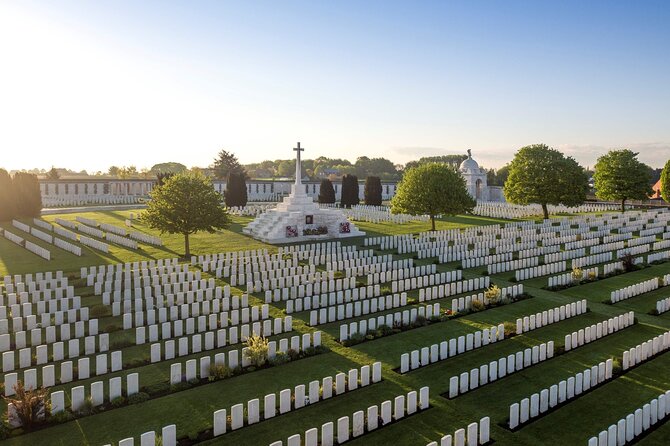
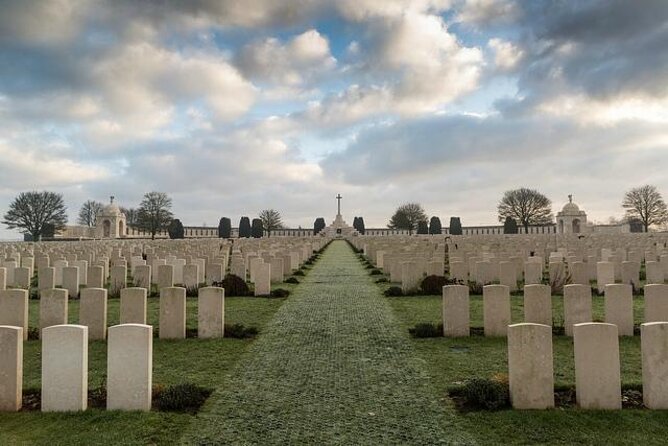
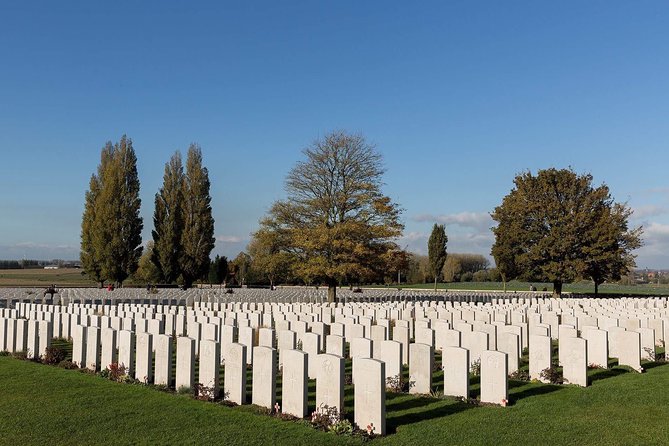
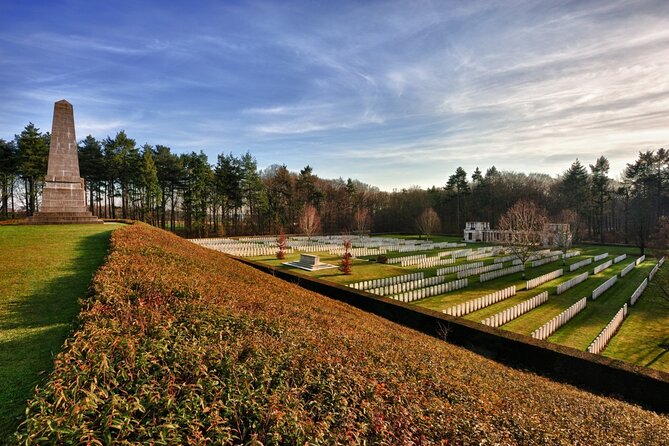
After that, you go to Tyne Cot Commonwealth War Graves Cemetery, one of the defining stops of the day. It is described as the largest Commonwealth cemetery in the world, with 35,000 graves.
Here is what you should plan for: Tyne Cot is big enough to create a sense of overwhelm, but it is also arranged with calm order. Your guide’s comments matter, because they help you avoid the dead-end thinking of, “How can this be real?”
If you take anything away from Tyne Cot, let it be scale and restraint. The graves are countless, but the message is simple. Each one is a person remembered.
Practical tip: bring a writing notebook or use your phone to jot names or phrases your guide shares. When the day is over, you will remember the feeling, but notes help you recall the specifics.
Essex Farm and Hill 60: McCrae, Bunkers, and Tunnels
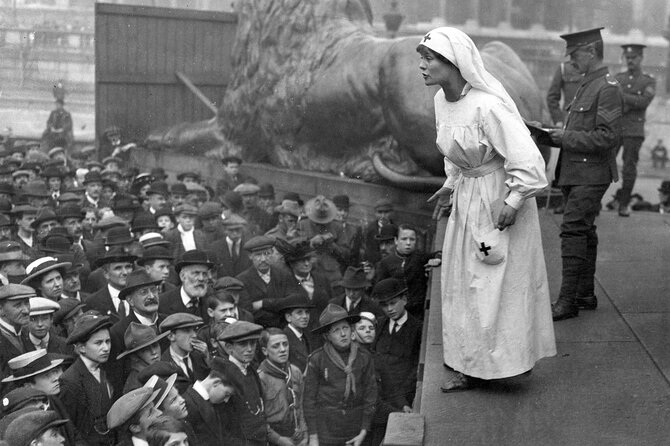
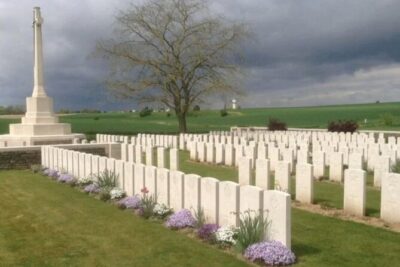
Next you visit Essex Farm Cemetery, including the area connected to the dressing station where Dr. John McCrae wrote the poem In Flanders’ Field. This stop is only about 15 minutes, so treat it like a focused arrival.
Even if you think you “already know” the poem, this is the kind of place that changes how you read it. The station connection makes the poem feel less like a quote and more like a response to what he witnessed.
From there, you head to Hill 60, where you can see strategic tunnels. This part of the experience adds another layer. You are not only learning about what happened above ground. You are seeing why soldiers dug, how they moved, and how the landscape shaped tactics.
Practical tip: for tunnel-related stops, wear shoes with grip. Ground can be uneven or damp depending on conditions. Even a short walk can become uncomfortable in bad weather.
Ypres in the Evening, Then Menin Gate at 8 pm
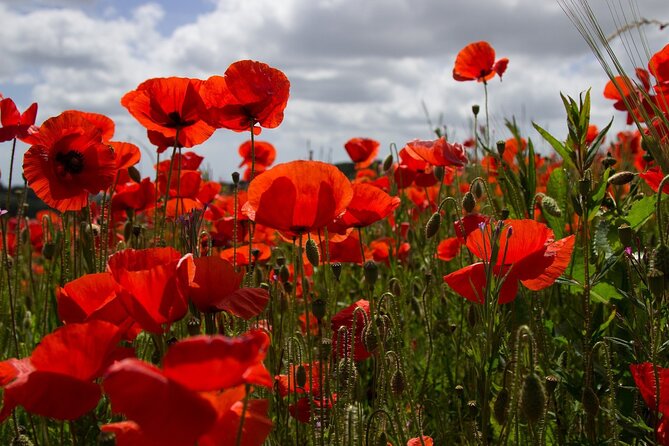
You finish the daytime touring by disembarking in Ypres, with time for independent exploration and dinner on your own schedule. This is where you get a mental reset before the main ceremony.
Ypres is not just a setting here. It is the living town that surrounds the memory. A few hours of casual strolling, a drink, or a quiet meal can make the later ritual feel less like a shock and more like a continuation.
Then you reconvene with your guide in time to attend the Last Post Ceremony at Menin Gate. The ceremony is scheduled for 8 pm, and it lasts about 30 minutes in the tour timing. The event is a daily tribute to Commonwealth soldiers and officers missing after battle.
What I find important: this is a public, civic act of remembrance. It is not staged for tourists alone. The tone stays respectful and quiet, and that makes your reaction feel more thoughtful than performative. The ceremony is short in real life, but it leaves a long echo, especially after hours among cemeteries and memorials.
If you are sensitive to emotion, this timing can be intense. Yet that intensity is also the point. The day is built to land on this moment.
What You Pay for 13 Hours of WWI Ground Truth
The price is $113.72 per person, and the tour runs about 13 hours. That might sound like a lot until you break down what you receive: air-conditioned coach transport, an expert guide, and access to multiple major sites across the Ypres salient, plus the Last Post experience in the evening.
For the money, the real value is the guidance. Stand-alone visits can be meaningful, but without context you miss why a monument matters, or how one cemetery relates to the next battle phase. When you have a guide talking you through the “why,” the day stops being a checklist and becomes a story.
Also, the tour is designed to be efficient. You get short visits at many places, but the day is sequenced so each stop builds on the last one. That is one reason people rate it highly.
Still, manage expectations. If you are hoping for lots of long free-walking time at each site, this is not that type of tour. The trade-off is coverage and context, and it comes with bus time.
Who This Tour Is Best For (and Who Should Rethink It)
This works best for you if you want structure. You like having someone connect the dots, and you want to visit major memorial sites without needing to plan routes, timing, and local logistics yourself.
It also suits history-minded families and students, because the day gives a guided narrative. One reason it is popular is that the guide often explains things in a way that feels like teaching, not lecturing.
Rethink the fit if you dislike long days or if you know you struggle with frequent coach stops. The schedule is full, and you should expect walking at multiple cemeteries and museum grounds. The tour also notes a moderate physical fitness level requirement.
Also, keep in mind the emotional weight. This is a remembrance tour. Even if you consider yourself “fine with history,” the combination of art, names, and the Last Post can be heavy.
Final Call: Should You Book This Flanders Remembrance Tour?
Yes, I think you should book it if you are looking for a single, high-impact WWI day from Brussels that actually teaches you what you are seeing. The strongest reasons are the start at Vladslo with Grieving Parents, the scale of Tyne Cot, and the finish at Menin Gate at 8 pm.
The main caution is the long schedule. Go in ready for a full day, not a relaxed afternoon. If you can handle that, you will leave with a deeper, more human understanding of what the Flanders battlefields represent.
If WWI is a topic you already know well, you may still enjoy it, but you should come prepared to absorb the emotional and memorial side, not just the facts. If that is what you want, this tour delivers.
FAQ
What time does the tour start, and how long is it?
It starts at 9:15 am in Brussels and runs for about 13 hours.
Where do I meet the tour, and where does it end?
You meet at Bd de Berlaimont 18, 1000 Bruxelles. The tour ends at Brussel-Centraal, Carr de l’Europe, 1000 Bruxelles.
Is lunch included?
No. Lunch is not included, though there is a lunch break in the day.
What’s included in the tour price?
Included are an air-conditioned vehicle and a professional multilingual guide. Radios and earphones are also included when necessary.
Will I have free time during the day?
You will have free time on excursions, and you also get time in Ypres for independent exploration and dinner at your own expense.
Is the coach air-conditioned, and in what language is the tour offered?
Yes, the coach has air-conditioning. The tour is offered in English (and the company also offers tours in English, French, and Spanish).
Do you pick up from hotels, and are pets allowed on board?
Hotel pickup is not available, and pets are not allowed on the coach.
Can I cancel for free?
Yes. You can cancel up to 24 hours before the experience starts for a full refund.
The latest Brussels write-ups
- Taxi DE Brussels to Zaventem Airport★ 5.0 · 3 reviews
- Taxi to Brussels National Airport DE Brussels★ 3.5 · 17 reviews
- Taxi Brussels Airport < - > Airport DE Charleroi (1 to 8 places)★ 3.5 · 3 reviews
- PRIVATE MPV TRANSFER FROM/TO BRUSSELS AIRPORT (Max 6 pax) ONE-WAY★ 5.0 · 4 reviews
- Standard vehicle from Brussels airport to city of Antwerp★ 5.0 · 4 reviews
- Luxury vehicle from Brussels airport to the city of Brussels★ 4.0 · 5 reviews
- Private transfer from BRU Airport to Brussels city with luxury limousine 3 pax★ 4.5 · 8 reviews
- Transfer Brussels Airport –> Brussels MB V Class 7 PAX (ONE WAY)★ 5.0 · 4 reviews
WWI Battlefield Tours, compared.
Great War Flanders Fields Minibus Tour w/ Lunch
Read our review →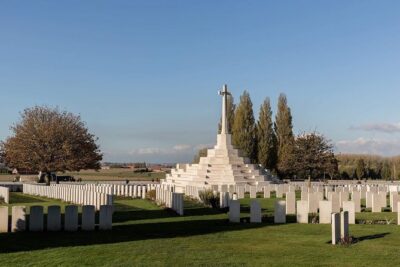
From IEPER Private 4-hour Tour of the Ypres Battlefield
Read our review →
In Flanders Fields and Passchendaele Half Day Morning Tour
Read our review →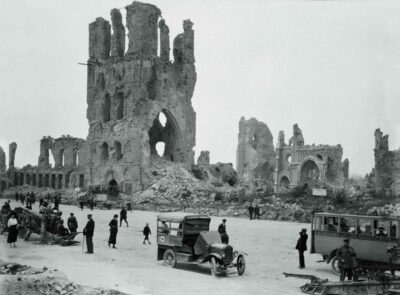
From Ypres, The Christmas Truce to Passchendaele Ypres Based WW1 private tour
Read our review →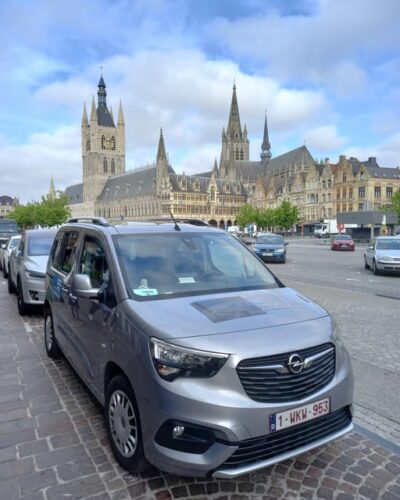
Private WW1 Flanders Fields Battlefield Day Trip
Read our review →Browse the lists this tour appears in