
REVIEW · WWI BATTLEFIELD TOURS
Flanders Fields Remembrance Tour from Bruges
WWI in Flanders can feel painfully close. This day trip packs battlefields, trenches, cemeteries, and the Last Post at Menin Gate into one long but well-timed route. I especially like the way you move from memorial sculpture to real ground like the Trench of Death, and then finish with the daily ceremony that’s kept going for more than 100 years. One thing to plan for: it’s a full day with multiple stops, so you may want extra patience if your group size ends up feeling a bit large for hearing commentary.
The tour is built around reflection, not speed. You get an expert guide on an air-conditioned vehicle, and the sights are the kind that make you stop talking and just look. My main concern is practical, not emotional: transportation and group size can vary, and one past guest noted a bus experience was bigger than expected, which can make it harder to hear.
In This Review
- Key Takeaways Before You Go
- Why a Bruges to Ypres Day Trip Feels More Than a Photo Stop
- The 11:00am Start, Long Day Pace, and What Transport Usually Means Here
- Vladslo and Diksmuide: Sculpture, Cemeteries, and the Trench of Death
- Ypres and Passchendaele: Tyne Cot, Gas Attacks, and Hill 60
- Essex Farm Field Hospital and the Poem That Traveled the World
- Commonwealth War Graves at Passchendaele: Seeing 35,000 Headstones in One Place
- The Last Post at Ypres Menin Gate: Where the Day Lands
- Price and Value: Is This Day Trip Worth $95.34?
- Who This Tour Suits Best, and What to Expect Emotionally
- Should You Book the Bruges Flanders Fields Remembrance Tour?
- FAQ
- What time does the tour start in Bruges?
- How long is the Flanders Fields Remembrance Tour?
- What’s included in the tour price?
- Is lunch included?
- What language is the tour offered in?
- What are the main stops and experiences during the day?
- How long is the Last Post Ceremony part of the tour?
- Do I need special physical fitness?
Key Takeaways Before You Go
- A WWI route with real emotional anchors, from Vladslo to Tyne Cot, with cemeteries at nearly every turn
- Expert commentary that connects places to events, helped by guides including Stephen, Dedrick, and Diederik in different groups
- Hill 60 and the tunnel story, plus museum time that helps you read what you’re seeing
- The Last Post at Menin Gate, a daily tribute for Commonwealth soldiers who were missing after battle
- Plan for a long day outdoors, with moderate walking at multiple memorial sites
Why a Bruges to Ypres Day Trip Feels More Than a Photo Stop
Bruges is all tidy canals and medieval stone, so it hits hard when the day shifts you to the Western Front. What makes this outing special is the sequencing. You start with graveyards and frontline remnants, then you build up context at museums and battlefield sites, and finally you close with a ceremony that turns remembrance into a shared daily ritual.
Two things make the experience click for me. First, you’re not only looking at monuments, you’re also standing in places tied to specific moments like gas attacks and trench warfare. Second, you finish at Menin Gate for the Last Post Ceremony, which is designed as a simple daily tribute. That simplicity matters. It lets the scale of the losses settle in, without needing drama.
One consideration: this is not a quiet, slow wander. It’s a structured day with many stops across several towns. If you prefer long museum time or breathing room between sites, you’ll want to mentally switch from sightseeing mode to remembrance mode and accept that the day is packed.
More Flanders Fields battlefield tours:
- From Bruges: Great War Flanders Fields Minibus Tour w/ Lunch
★ 4.9 · 1,257 reviews - From Bruges: Flanders Fields Remembrance Full-Day Trip
★ 4.8 · 65 reviews - From Bruges: Private WW1 Flanders Fields Battlefield Day Trip
★ 5.0 · 10 reviews
The 11:00am Start, Long Day Pace, and What Transport Usually Means Here
The tour starts at 11:00am at BargepleinBargeweg, 8000 Brugge. It ends back at that same meeting point, which is convenient if you want to keep your evening flexible in Bruges.
You’ll travel in an air-conditioned vehicle with a professional multilingual guide. The tour description you’ll see emphasizes a comfortable minivan, but one review pointed out that the vehicle can be a larger bus and the group can be bigger than expected. That’s the practical trade-off of day trips like this. You get the expert guide and the efficient route, but it can come with slightly harder listening conditions.
Group size is listed as a maximum of 200 travelers, which sounds huge, but that doesn’t automatically mean you’ll feel like you’re packed in. Still, when you’re dealing with commentary at roadside stops, even an extra few seats can affect how clearly you catch details. My advice: bring an extra layer for chilly or windy cemetery air, and if you’re sensitive to sound, sit where you can hear the guide best.
Vladslo and Diksmuide: Sculpture, Cemeteries, and the Trench of Death
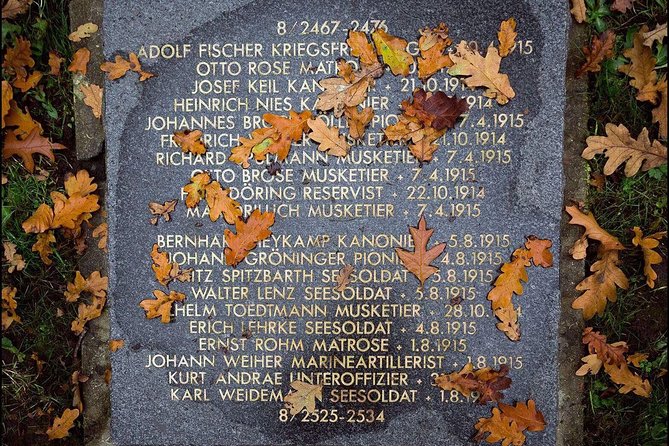
One of the most moving stretches of the day begins with Vladslo and the Germany Military Cemetery. This is where the war’s human cost stops being abstract. You’re looking at thousands of soldiers, and the setting helps you understand why so many families later insisted on remembrance through burial grounds.
From there, the tour heads to Diksmuide and sets up one of the day’s emotional high points: the sculpture of Grieving Parents by Käthe Kollwitz. It’s the kind of artwork that doesn’t need extra explanation. You see grief made physical, and then you realize you’re walking through a landscape where grief was not a private thing. It shaped whole towns.
Next comes the Trench of Death, a bleak stretch along the Western Front where many soldiers met their end. This part of the route is valuable because it gives you a sense of proximity. The war isn’t presented as distant history. It’s presented as a place where soldiers lived, waited, suffered, and died in tight, brutal conditions. One past guest even described the mental shock of seeing the contrast between calm today and trench horrors.
A fair note: outdoor stops like these are harder to linger through than in a museum. If you need quiet time to process, plan to spend extra minutes at the parts that hit hardest, then accept that the rest of the day moves on.
Ypres and Passchendaele: Tyne Cot, Gas Attacks, and Hill 60
After the Trench of Death, the day turns toward Ypres and the wider Passchendaele battlefield area. Lunch is listed as not included in the base price, but the day’s plan still includes a hearty plowman-style lunch in Ypres. That’s worth clarifying before you go: bring cash or card just in case, or confirm whether lunch is covered for your booking.
From there, your route includes several standout WWI sites.
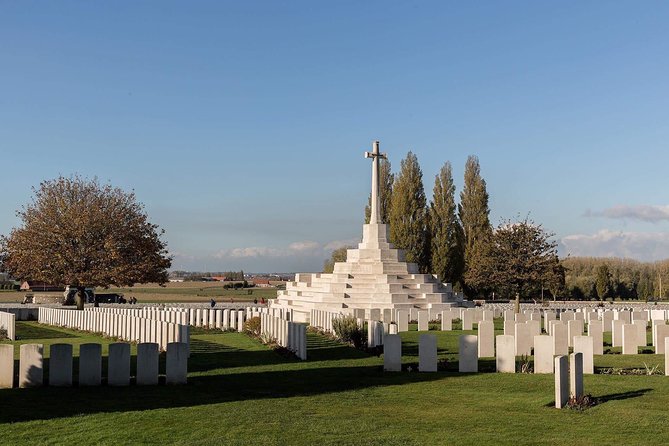
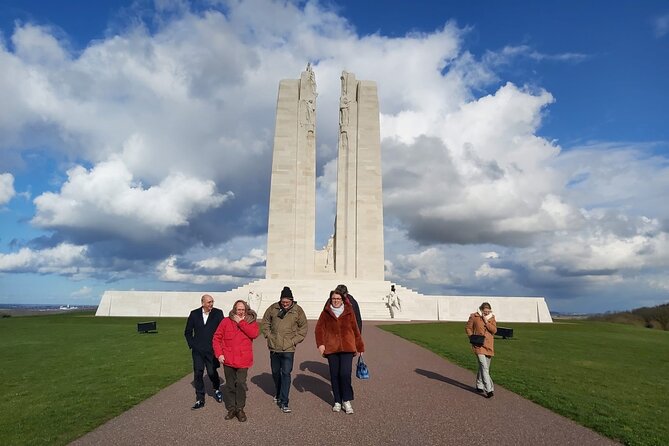
You’ll visit the Passchendaele New British Cemetery, with time built in before moving onward to Tyne Cot, described as the world’s largest Commonwealth cemetery. If cemeteries feel overwhelming, this is still the right place to see, because it demonstrates scale in a way that statistics can’t. Standing among many thousands of headstones changes how you understand the word sacrifice.
The tour also includes Hill 60 in the Zwarteleen area of Zillebeke, plus battlefield context around tunnels. This is one of the best additions on the itinerary because it shifts your focus from what you see above ground to what was happening underneath. Trench systems and tunnels were not just engineering. They were survival, communication, and a way to keep fighting when the surface was destroyed.
Before Hill 60, you’re given time for museum learning, including varied exhibitions at the Flanders Fields Museum and an audio-guided story about the war. Even if you think you know WWI, museum context helps you read the battlefield like a map instead of a jumble.
What to watch for: on at least one past visit date, the museum was reported closed and the Menin Gate area had construction visible. That won’t ruin the day, but it can affect how much you see in exactly the way you planned. If you’re going for a very specific museum moment, it’s smart to expect that dates can change conditions.
More day trips leaving Bruges:
- From Bruges to Damme: Private Electric Scooter tour
★ 4.8 · 194 reviews - From Bruges: Family-Friendly Countryside Guided Bike Tour
★ 4.8 · 15 reviews - Private Transfer from Bruges to Brussels By Business car
★ 4.0 · 13 reviews - Private taxi Transfer from Bruges to Amsterdam
★ 5.0 · 3 reviews
Essex Farm Field Hospital and the Poem That Traveled the World
One stop that turns the day from battlefield viewing into cultural remembrance is Essex Farm Field Hospital. This is where Dr. John McCrae wrote the poem In Flanders Fields. It matters because the poem helped carry the war’s moral shock beyond Belgium.
You spend about 15 minutes here, which sounds short, but the setting helps you connect words to place. You’re not reading poetry from a distance. You’re reading it with the battlefield towns and cemeteries still in your head.
If you care about literature, this is one of the most “sticky” moments of the day. It turns all those headstones into language and then into cultural memory. If you don’t usually read poetry, you’ll still understand why people keep quoting this piece. It gives grief a structure.
Commonwealth War Graves at Passchendaele: Seeing 35,000 Headstones in One Place
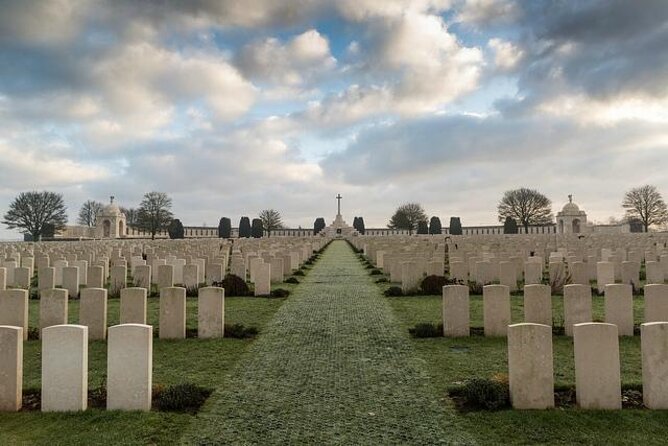
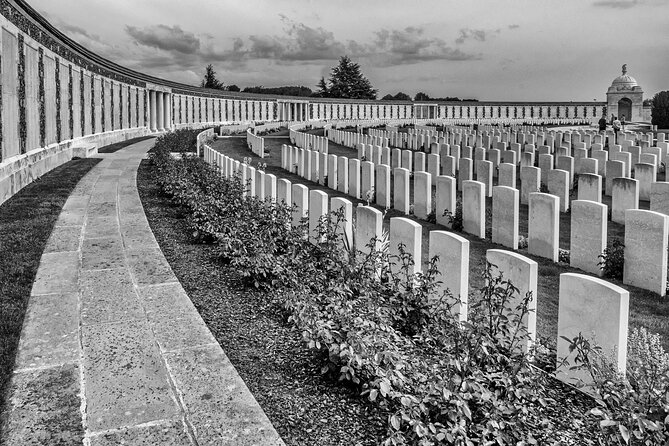
Another heavy-hitter on the itinerary is the Commonwealth War Graves Cemetery near the Passchendaele area, where you’ll see 35,000 solemn headstones. This is the part that most directly conveys the long math of the war. It’s not only a few battles. It’s years of loss piled into one landscape.
This stop works best if you allow yourself to slow down. The cemeteries reward looking. You can trace family patterns, unit connections, and the sheer repetition of names across rows. It’s also where you understand why memorials weren’t optional. They were needed so the dead would not vanish into time.
One practical point: cemeteries are spread out. You’ll likely cover short distances between sections of ground, and you should have a moderate fitness level for standing and walking through multiple outdoor areas in one day.
The Last Post at Ypres Menin Gate: Where the Day Lands
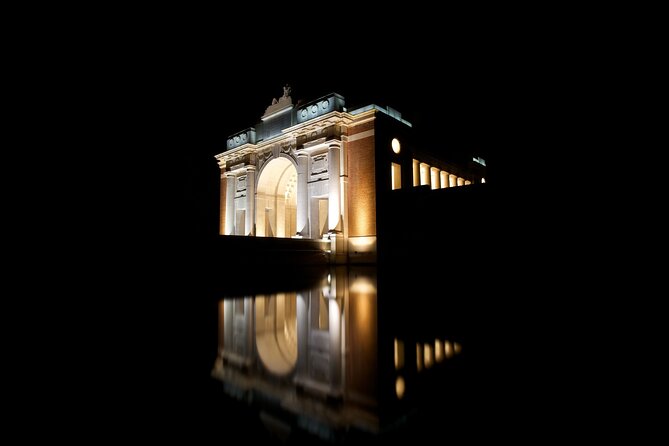
The emotional finale is the Last Post Ceremony at Ypres Menin Gate, scheduled for about 30 minutes. The tour frames it as a tribute to Commonwealth soldiers and officers who were missing after battle.
This is the “why” moment for the whole day. Everything you’ve seen earlier becomes easier to understand when you watch the ceremony. The crowd listens. The names and meaning are carried forward in a ritual that has continued for generations.
Multiple past guides named in feedback brought real clarity to this ending. People praised guides including Stephen, Dedrick, Diederiek, Diedrich, and Diederik for respectful, careful explanations that helped the ceremony hit harder without turning it into spectacle.
There’s also a reminder that this isn’t just about a single day. One guest even compared the experience to Remembrance Sunday and said it felt even more moving at Menin Gate itself, where the ceremony connects directly to the memorial wall and the reality of “missing” soldiers.
Weather matters. If it’s windy or cold, you might feel it more during a standing ceremony. Layer up. Bring your calm focus. Let the day finish on its own terms.
Price and Value: Is This Day Trip Worth $95.34?
At $95.34 per person, this tour sits in the “serious but not extravagant” category for guided Western Front days from Belgium. You’re paying for three things at once:
- Expert guidance across a long route of battlefield sites and memorials
- Transportation by air-conditioned vehicle from Bruges and back
- Reserved time blocks for key stops, including the Last Post Ceremony
Lunch is listed as not included, so factor that into your real total cost. Still, the itinerary includes a lunch stop, and past feedback mentions lunch being part of the day for some departures. Either way, budget for lunch to avoid stress.
If you’re the kind of traveler who likes to pair a museum visit with field locations you can actually walk around, this is a strong value. If you’re only after one or two famous spots, you might feel the day is too full. But if you want a structured route that builds understanding step by step, the price usually feels fair.
Who This Tour Suits Best, and What to Expect Emotionally
This tour fits you if:
- You want a guided, respectful WWI route instead of driving yourself
- You’re interested in Commonwealth remembrance and the story of why sites like Tyne Cot and Menin Gate matter
- You like the mix of cemeteries, trenches, and context from museums
It might be less satisfying if:
- You hate long days and frequent coach transfers
- You prefer a quiet group size with perfect hearing for every sentence
- You expect a strictly small group every time, since at least one past experience mentioned hearing difficulty in a larger-than-promised group
Emotionally, come ready. This isn’t entertainment. It’s remembrance on a scale that can feel overwhelming. One consistent thread from feedback is that the day leaves people with a stronger sense of connection to the young who died, and the futility and courage become impossible to ignore once you stand in the right places.
Should You Book the Bruges Flanders Fields Remembrance Tour?
I’d book this if you want the cleanest path to the Western Front from Bruges: you get transportation, an expert guide, and a finish at the Last Post Ceremony at Menin Gate, which is hard to replicate on your own without planning time and logistics.
I’d think twice if your main goal is one single site. This tour is designed as a full-day storyline, from Vladslo and Diksmuide to Tyne Cot, Hill 60, Essex Farm, and then the ceremony. It’s powerful, but it’s also packed.
If you do book, do one smart thing before you go: plan for listening comfort and outdoor time. Bring a warm layer, expect a long sit-and-stop day, and treat each cemetery and trench site as its own moment. That’s how the day pays you back.
FAQ
What time does the tour start in Bruges?
The tour starts at 11:00am at BargepleinBargeweg, 8000 Brugge. It returns to the same meeting point at the end.
How long is the Flanders Fields Remembrance Tour?
The duration is about 10 hours 30 minutes.
What’s included in the tour price?
Included features are an air-conditioned vehicle and a professional multilingual guide. The tour also offers a mobile ticket.
Is lunch included?
Lunch is listed as not included, but the day’s plan includes a lunch stop in the Ypres area. It’s smart to confirm what your specific booking includes.
What language is the tour offered in?
The tour is offered in English.
What are the main stops and experiences during the day?
You’ll visit several WWI sites including Germany Military Cemetery near Vladslo, the Trench of Death, Tyne Cot cemetery, Hill 60, Essex Farm Cemetery, and you’ll attend the Last Post Ceremony at Ypres Menin Gate.
How long is the Last Post Ceremony part of the tour?
The Last Post Ceremony stop is listed at about 30 minutes.
Do I need special physical fitness?
The tour notes a moderate physical fitness level. You should be comfortable with walking and spending time at outdoor memorial sites and cemeteries.
The latest Bruges write-ups
- 2-Hour Private Walking Tour of Bruges★ 5.0 · 13 reviews
- Explore the Instaworthy Spots of Bruges with a Local★ 5.0 · 3 reviews
- Discover Bruges while playing! Escape game – The alchemist★ 4.5 · 3 reviews
- Photo Tour “Jan van Eyck”★ 4.0 · 7 reviews
- 6 Hour Bruges Shore Excursion from Zeebrugge Cruise Port★ 4.5 · 23 reviews
- Self-Guided Secrets Tour – Explore Bruges & Miss nothing★ 5.0 · 4 reviews
- Discover the secrets of Bruges by playing!★ 4.5 · 7 reviews
- Secrets of Bruges: Walking Tour With a Chocolate and Waffle Bite★ 5.0 · 27 reviews
WWI Battlefield Tours, compared.
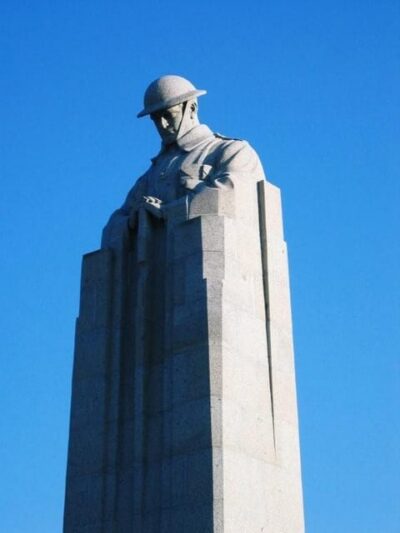
Great War Flanders Fields Minibus Tour w/ Lunch
Read our review →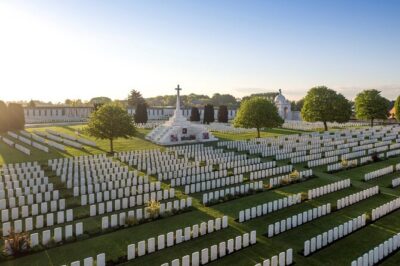
Flanders Fields Remembrance Tour from Brussels
Read our review →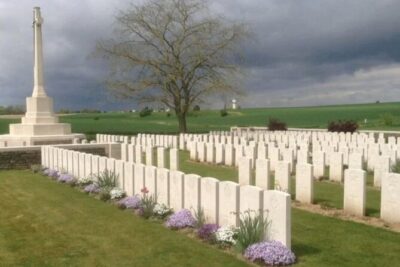
From IEPER Private 4-hour Tour of the Ypres Battlefield
Read our review →
In Flanders Fields and Passchendaele Half Day Morning Tour
Read our review →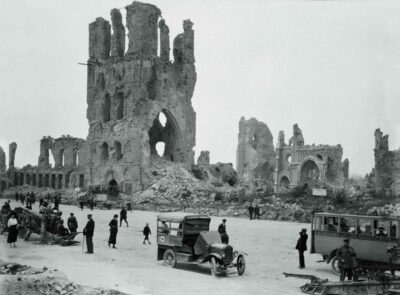
From Ypres, The Christmas Truce to Passchendaele Ypres Based WW1 private tour
Read our review →
Private WW1 Flanders Fields Battlefield Day Trip
Read our review →Browse the lists this tour appears in