
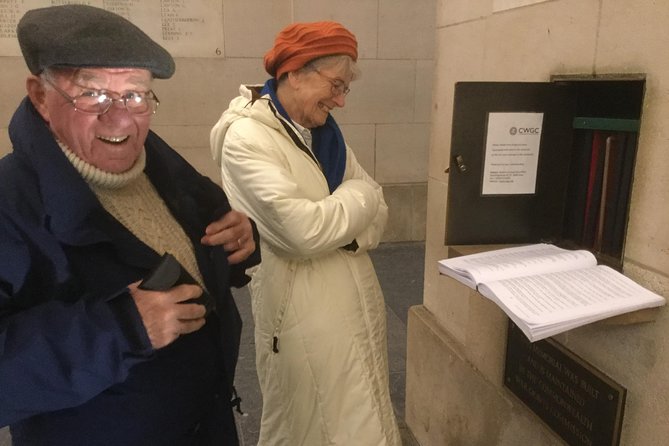
REVIEW · WWI BATTLEFIELD TOURS
From LIlle or Bruges, Christmas Truce to Passchendaele Ypres 1 day WW1 private
Trenches make the Great War feel close. This is a private, English-led day that links the Ypres Salient battle line to the places you keep seeing in photos, plus stops tied to the Christmas Truce and Australian operations. I especially love the private guide pacing, which helps the day feel human instead of rushed, and I love how the route stacks major sites like Tyne Cot and Menin Gate into one logical arc.
The biggest thing to consider is time. It runs about 9 hours, and lunch isn’t included, so you will want to plan ahead for energy between cemeteries and museums.
In This Review
- Key things that make this WW1 route worth your time
- Ypres to Passchendaele: why this route feels different
- Private pickup and a one-day rhythm that actually works
- Messines Ridge: Truce footsteps, mine craters, and the Hitler crypt
- Hooge Crater Cemetery and the Menin Road gun pits
- The Australian HQ ground from September 1917, plus Nov 1914 context
- Polygon Wood: walking the woods and reading the bunker remains
- Hill 60: the 3.10am mine and Captain Woodward’s tunnelling story
- Driving the Australian advance, then arriving at Tyne Cot Cemetery
- John McCrae and Menin Gate: a poem and then the missing names
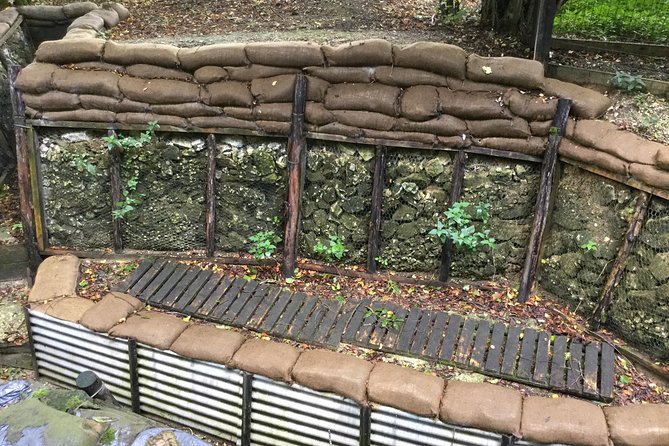
- Sanctuary Wood Museum: original trenches you can still understand
- Price, what you actually get, and who this tour fits best
- Should you book this Ypres to Passchendaele WW1 private tour?
- FAQ
- How long is the Ypres WW1 private tour?
- What is included in the price?
- Is lunch included?
- Do you pick up from hotels and stations?
- Is this tour private and in English?
- What is the cancellation policy?
Key things that make this WW1 route worth your time
- Messines Ridge connects the Battle of Messines, mine craters, and a Christmas Truce moment in one stop
- Hooge Crater Cemetery puts Pat Bugden VC in context and places you alongside the Menin Road gun pits
- Polygon Wood brings you onto the ground of the Australian capture, including concrete bunkers that still exist
- Hill 60 focuses on the 3.10am, 7 June 1917 mine explosion and the tunnelling story behind it
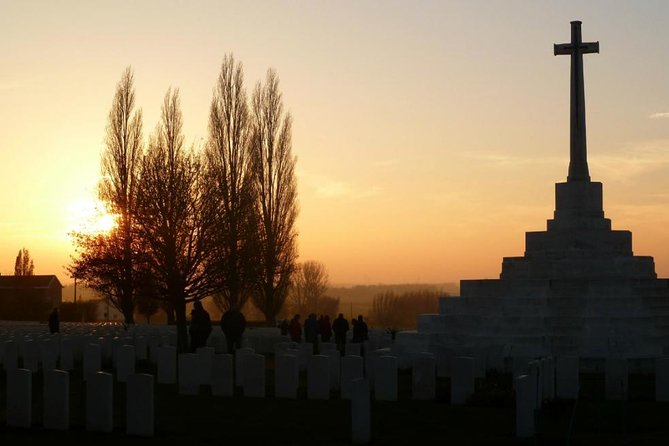
- Tyne Cot Cemetery shows scale with meaning, with 12,000 burials and only 3,000 named
- Sanctuary Wood Museum delivers original trenches, with the museum ticket included
Ypres to Passchendaele: why this route feels different
Ypres is not just a place name. It is a whole stretch of ground where the war kept resetting itself, trench by trench, ridge by ridge. This tour treats the area like a connected story, so the sights do not feel random or like a checklist.
What makes this route especially compelling is the way it moves from the earlier explosive moments around Messines into the later, harder grinding of the Passchendaele fighting. You do not just look at memorials. You see how the land shaped the fighting, and how fighting shaped the land that later became cemeteries and memorial spaces.
More Flanders Fields battlefield tours:
- From IEPER Private 4-hour Tour of the Ypres Battlefield
★ 5.0 · 154 reviews - In Flanders Fields and Passchendaele Half Day Morning Tour
★ 5.0 · 117 reviews - From Ypres, The Christmas Truce to Passchendaele Ypres Based WW1 private tour
★ 5.0 · 29 reviews
Private pickup and a one-day rhythm that actually works
You start at 9:00 am with pickup from hotels or B and Bs in a 66 km radius of Ypres, including Ghent Dampoort Station for Ghent arrivals, plus areas like Lille and Arras. That matters because the best WW1 days are the ones where you spend less time organizing and more time looking carefully.
This is a private tour, so your group stays together and you can ask questions without waiting for a crowd to catch up. You also get a mobile ticket, and the tour is offered in English.
The tradeoff is simple: you are on the go for most of the day. Many stops are about an hour or less, which means you get focus, not a long sit-down at every location. If you like your war history slow and quiet, I suggest bringing a notebook and saving your biggest questions for your guide as you go.
Messines Ridge: Truce footsteps, mine craters, and the Hitler crypt
Messines Ridge is where the tour shows its range. You get the story of the Battle of Messines, then you go out to see mine craters that still mark where the earth was violently changed. It is one of those places where the terrain is the exhibit.
Then you turn to one of the most emotionally complicated moments of the war, the Christmas Truce scene mentioned on this stop. Even if you know the headlines, standing at the actual site is different because you are seeing the same cold ground where men were close enough to have shared moments.
This stop also includes the crypt where Adolf Hitler was treated for his wounds, which adds an unsettling historical layer you cannot really dodge when you are on the battlefield. Whether that part interests you or not, it helps explain why so many layers of memory overlap around Ypres.
You have about 2 hours here, and admission is free. That is a good length, because Messines needs time to absorb what you are seeing before you move on.
Hooge Crater Cemetery and the Menin Road gun pits
Hooge Crater Cemetery is a short stop with a heavy footprint. You visit Pat Bugden VC, noted here as a 20-year-old recipient of the Victoria Cross. The point is not just the medal. It is that the cemetery ties bravery to a specific name, age, and place.
From there, you stand on the iconic Menin Road alongside where the Australian gun pits were for the assault on Passchendaele. This is one of the most practical parts of the day. You can connect what you read in the guide’s explanation to where artillery positions actually sat, so you start picturing operations instead of only imagining tragedy.
This stop runs about 15 minutes, and admission is free. Short does not mean shallow here, but it does mean you should be ready to look fast and ask questions early.
A few more Ypres outings worth a look
The Australian HQ ground from September 1917, plus Nov 1914 context
Between major cemetery and monument stops, the tour includes a site tied to the Australian HQ in September 1917, and also earlier actions on the same ground in November 1914. This is the kind of detail that makes the Salient feel less like a single battle and more like a long, repeating struggle over the same corridors.
Because the time here is not clearly framed as a long on-foot walk, you will likely get a brief, guided orientation. Still, those short contextual stops can be the difference between feeling lost and feeling oriented.
Polygon Wood: walking the woods and reading the bunker remains
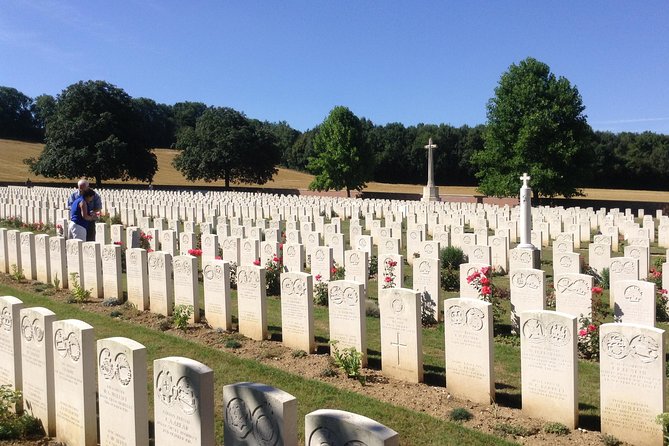
Polygon Wood is one of the best stops in this day if you want to understand how hard it was to fight in broken terrain. You walk through the woods and visit concrete bunkers that were there when the Australian soldiers captured the position during the battle.
Then you shift focus to the cemetery and the Australian 5th Division monument. That combination works because it shows the sequence: a place where soldiers fought in cramped conditions, followed by a commemorative space that makes the aftermath visible and permanent.
The time here is about 30 minutes, admission is free. The main drawback is also the most normal one for this area, the woods and paths can be uneven and damp depending on weather. Wear shoes you can trust on muddy ground, not the ones you wear for museum floors.
Hill 60: the 3.10am mine and Captain Woodward’s tunnelling story
Hill 60 gives you a different angle on WW1 engineering. You hear the story of Captain Woodward and the 1st Australian Tunnelling Coy, and you learn about a massive mine placed there that was blown at 3.10am on 7 June 1917.
Then you see the crater tied to that event. Watching the shape of the ground helps you grasp why tunnelling mattered. It was not abstract strategy. It was a way to move the fight underground and then reappear it at the surface where the enemy positions sat.
This stop runs about 45 minutes, and admission is free. If you are the type of traveler who likes battle stories but also wants the practical mechanics behind them, Hill 60 is a highlight.
Driving the Australian advance, then arriving at Tyne Cot Cemetery
Between Hill 60 and Tyne Cot, you drive through the line of the Australian advance. This “moving viewpoint” is important because it helps you keep orienting between sites. Without those drive segments, the Salient can start feeling like separate postcards. With them, it feels like a corridor the Australians pushed through.
Then Tyne Cot Cemetery lands with full weight. It is described here as the worlds largest Commonwealth War Graves Commission cemetery, with 12,000 soldiers buried and only 3,000 named. That ratio hits hard because it signals how many families could not attach a simple identity to a grave.
You also learn that two Australian VC recipients are buried here. That detail is useful because it turns the cemetery from a general memorial into a place where specific hero stories are tied to the broader cost.
You get about 45 minutes, admission is free. Practical tip: plan a slow walk through the headstones and leave room for the names you can actually read. This cemetery is so large that you will see more if you move steadily rather than trying to absorb everything in one sweep.
John McCrae and Menin Gate: a poem and then the missing names
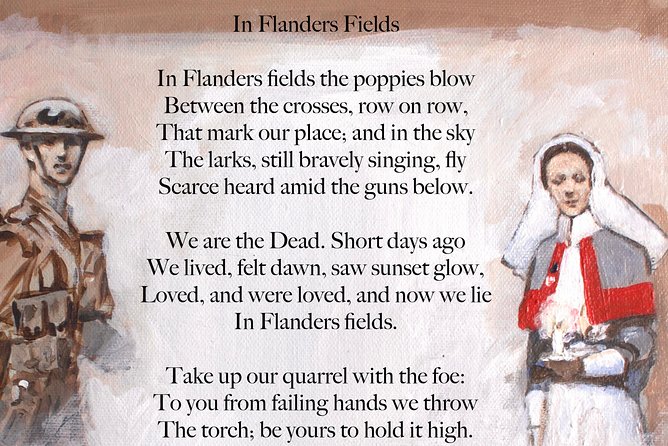
The John McCrae site stops the story and shifts it into literature and grief. You see the hospital site where Lt Col John McCrae composed the iconic poem In Flanders Fields.
Even if you have read the poem before, seeing the place where it was written helps it land in your body, not just your memory. You start to feel the gap between a man writing words and the machinery of war tearing through towns and fields nearby.
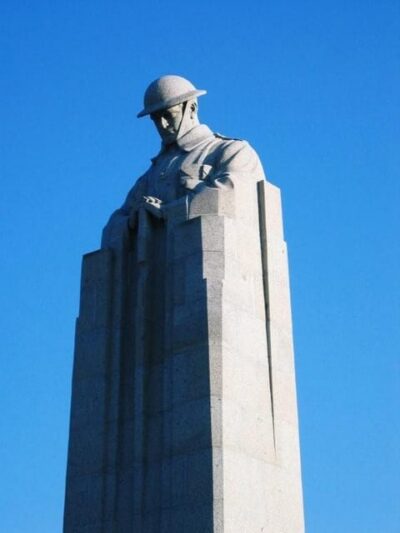
You then go to Menin Gate Memorial, where you hear the story of how it came about and the stories behind 55,000 names listed as missing. Menin Gate is famous, but it can also feel like a wall of names if you do not have context. This stop aims to give you that context, so you understand what the memorial is doing and why the names matter.
John McCrae takes about 30 minutes, Menin Gate takes about 20 minutes, and admissions are free at both.
Sanctuary Wood Museum: original trenches you can still understand
The final major stop is Sanctuary Wood Museum, which is included with the admission ticket. You look at unique original First World War trenches, and you spend about 40 minutes here.
This is a great place to refresh your perspective, because by the time you reach it, you have already seen memorials and open-air sites. A trench museum gives you a different kind of truth, the tight, built-in reality of where soldiers lived and waited.
If you tend to get museum fatigue, this still works because the trenches are physical. You do not just read about the war. You walk into the logic of it.
Price, what you actually get, and who this tour fits best
At $532.32 per person for a private day, this tour sits in the higher end of the market. The way it justifies the price is through combination value: private guiding, pickup and drop-off from multiple departure points, multiple major WW1 locations, and tickets that are free at many stops plus one included admission at Sanctuary Wood Museum.
You also get bottled water, and you are not responsible for juggling transit between scattered sites. For a one-day WW1 focus, that saves time and reduces stress, which is part of what you pay for when you choose a private route like this.
Who should book it? I think it fits best if you want a clear, guided storyline from Messines into the Passchendaele era, and you value asking questions while you are standing on the ground. It can also work well if your family history connects you to the region, since the tour can be tailored to match your interests.
A possible drawback tied to the price is that the day is structured into shorter stop times at many locations. If you want long stays, deep, slow walking, or a very flexible day that follows your pace for hours at each site, you might prefer a less scheduled option. Here, you get focus. If your focus is sharp, you will love it.
Should you book this Ypres to Passchendaele WW1 private tour?
Book it if you want one day that hits the core Ypres Salient anchors, with a guide who keeps connecting history to the ground in front of you. The route’s strength is the progression, Messines Ridge into the Australian operations around Hooge, Polygon Wood, and Hill 60, then out to the large memorial spaces like Tyne Cot and Menin Gate.
Consider a different format if you are traveling with someone who needs long breaks, because lunch is not included and you will be on the move for about 9 hours. Also, if you are new to WW1 and easily overwhelmed, you might want to decide in advance what you want most from the day, trenches and tactics, cemeteries and names, or specific themes like the Christmas Truce.
If you do book, come ready to treat this like a respectful site visit, not a casual sightseeing loop. Wear comfortable shoes, bring layers for the weather, and plan a snack or light lunch on your own so you can keep your energy for the larger cemeteries.
FAQ
How long is the Ypres WW1 private tour?
It runs for about 9 hours.
What is included in the price?
The tour includes bottled water and a mobile ticket. Admission is free for many stops, and the Sanctuary Wood Museum admission ticket is included.
Is lunch included?
No, lunch is not included.
Do you pick up from hotels and stations?
Yes. Pickup is offered from hotels or B and Bs in a 66 km radius of Ypres, including Ghent Dampoort Station for Ghent pick-up points, plus options in Lille and Arras.
Is this tour private and in English?
Yes. It is a private tour, and it is offered in English.
What is the cancellation policy?
Free cancellation is available. You can cancel up to 24 hours in advance for a full refund.
The latest Ypres write-ups
- Discover Tournai while playing! Escape game – The alchemist★ 4.0 · 3 reviews
- Full Day Canadian WW1 Vimy and Somme Battlefield Tour from Ypres★ 5.0 · 6 reviews
- e-Scavenger hunt Ypres: Explore the city at your own pace★ 4.5 · 6 reviews
- From Ypres 4hr Christmas Truce and Monster Mines of Messines PRIVATE Tour★ 5.0 · 5 reviews
- From Ypres: WWI Battlefields Private Tour★ 5.0 · 25 reviews
- Bellewaerde Aquapark Entrance Ticket★ 4.4 · 19 reviews
- From Ypres, The Christmas Truce to Passchendaele Ypres Based WW1 private tour★ 5.0 · 29 reviews
- Ypres: An exploration of the deadly salient battlefields★ 5.0 · 76 reviews
WWI Battlefield Tours, compared.
Great War Flanders Fields Minibus Tour w/ Lunch
Read our review →
Flanders Fields Remembrance Tour from Brussels
Read our review →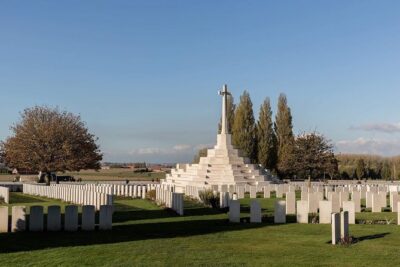
From IEPER Private 4-hour Tour of the Ypres Battlefield
Read our review →
In Flanders Fields and Passchendaele Half Day Morning Tour
Read our review →
From Ypres, The Christmas Truce to Passchendaele Ypres Based WW1 private tour
Read our review →
Browse the lists this tour appears in