
REVIEW · WALKING TOURS
Ghent: Walking Tour from Friday Market to the Cathedral
Three towers, one unforgettable walk. This private tour strings together Ghent’s skyline of three towers with major art inside St-Bavo Cathedral, including work by Jan Van Eyck and Peter Paul Rubens. You also get a smart mix of classic medieval sights and the city’s modern European role, so Ghent feels like one continuous story.
I like how the experience starts with bus context and then switches into a focused walking route through canal-side streets. You’ll begin near Sint-Jakobskerk (Sint-Jacobskerk), then move through key districts before landing in the old center around the Friday Market. One consideration: the 150 minutes packs a lot in, so if you want extra time sitting with art or photos, you may need to choose what matters most to you.
In This Review
- Key things you will notice on this tour
- How the Tour Flows: Coach Context and a Center-Core Walk
- Millionaires’ Quarter, St. Peter’s Area, and the Art Nouveau to Art Déco Transition
- European Parliament Buildings: Ghent’s Modern Role in Plain Sight
- Woodrow Wilson Square and the Old Town Starting Point
- Belfry and Town Hall: Power, Trade, and the City’s Pride
- Friday Market, Fish Market, and Patershol: Medieval Life in Daily Form
- Bonus value: the food and drink recommendations
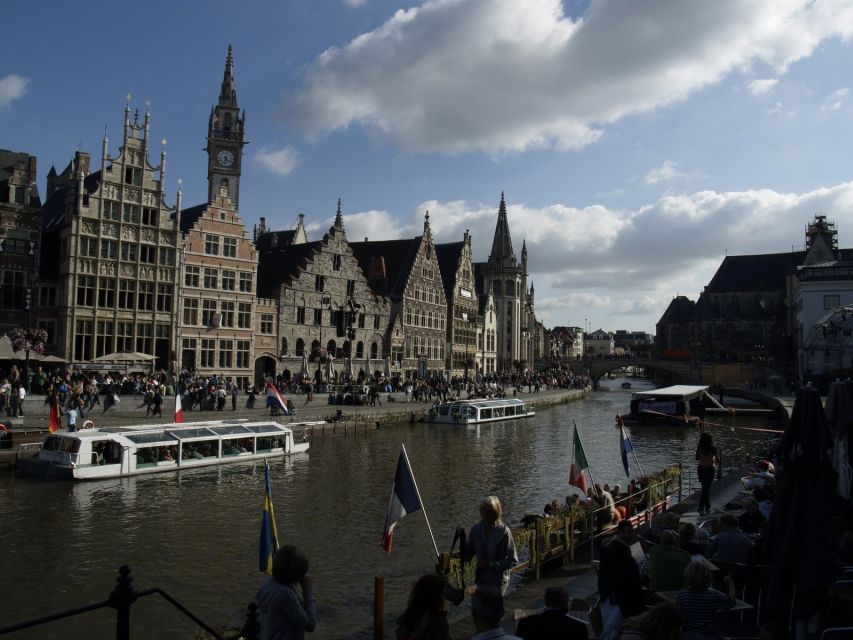
- Old Harbor Views and the Three-Tower Skyline
- St-Bavo Cathedral: Mystic Lamb by Jan Van Eyck and Rubens Paintings
- What the 150 Minutes Means for Your Pace
- Price and Value: $388 Per Group Up to 20
- Who Should Book This Ghent Friday Market to Cathedral Tour
- Should You Book It?
- FAQ
- Where does the tour start?
- How long is the tour?
- What will I see on this tour?
- How much does it cost?
- What is included and not included?
- What languages does the guide speak?
Key things you will notice on this tour
- Private group up to 20 means a calmer pace and easier conversations with the guide
- Bus highlights like the Millionaires’ Quarter, St. Peter’s station, and Art Nouveau and Art Déco facades set the stage fast
- European Parliament (Commission and Council) buildings bring Ghent’s modern influence into view
- Old harbor viewpoints frame St. Michael’s church and the famous three-tower skyline
- St-Bavo Cathedral focuses your visit on the Mystic Lamb by Jan Van Eyck and major Rubens paintings
- Friday Market, Fish Market, and Patershol show Ghent as a living city, not a museum only
How the Tour Flows: Coach Context and a Center-Core Walk
This is a 150-minute private experience that works because it saves you from doing everything cold-start. You meet at Saint-Jacobschurch (Sint-Jakobskerk), where you can leave the coach. From there, you get a bus tour that gives Ghent’s “why” before you see the “wow” up close on foot.
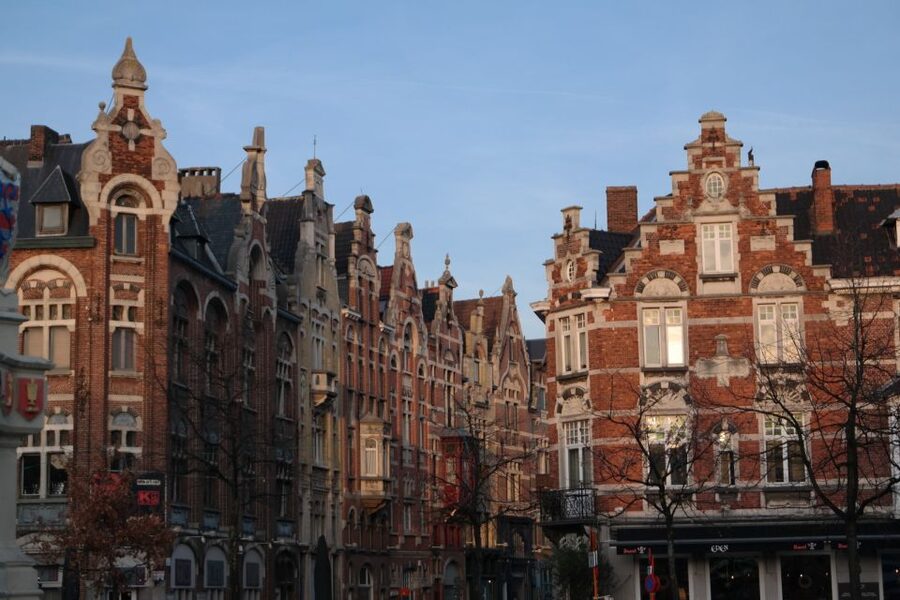
Ghent can feel layered. It is medieval and modern at the same time, cut by canals and shaped by two rivers, the Scheldt and the Leie. The guide’s bus overview helps you understand what you are about to walk through. Then the walking part concentrates on the central sights, so you do not waste time zig-zagging through the city.
The walking segment is built around the old-town feel: narrow streets, water nearby, and the kind of squares where you can imagine daily life from centuries ago. If you like architecture and you also like context, this structure makes sense.
More Walking Tours in Ghent
- Historical Walking Tour: Legends of Gent
★ 5.0 · 1,761 reviews - Ghent: Belgian Chocolate Walking Tour with Tastings
★ 4.9 · 259 reviews - Gastronomic Walking Tour of Gent – Tasters included
★ 5.0 · 199 reviews
Millionaires’ Quarter, St. Peter’s Area, and the Art Nouveau to Art Déco Transition
One of the smartest parts of this tour is the bus route. It covers multiple “faces” of Ghent in a short time, so you can connect the medieval center to the city that grew later.
You will pass by the Millionaires’ Quarter, then head near St. Peter’s station. From there you get to see avenues with Art Nouveau and Art Déco exteriors. Even if you are not a design nerd, you will likely spot how the details change from neighborhood to neighborhood.
Why this matters for your trip: it helps you stop thinking of Ghent as just one era. The city’s canals and squares are very old, but the streets around major stations and avenues show the city’s later ambitions. You come to the old center already primed to notice how different periods “talk” to each other in the same city.
You also stop at St. Peter’s square, where you see St. Peter’s church and Vooruit. The route also includes the building of the socialist trade union. That mix is useful because it gives you a sense of Ghent as a place where culture and politics shaped public space, not just churches and castles.
European Parliament Buildings: Ghent’s Modern Role in Plain Sight
The tour also brings you toward Ghent’s modern identity. You will learn about the buildings of the European Parliament Commission and Council.
This is not just a photo stop. The point is to show you why a city known for canals and towers now hosts high-level European institutions. Even if you have never followed EU politics closely, it helps to understand that Ghent’s importance today is not only symbolic. It is structural.
I like that this is handled as a learning moment during the ride, so you do not have to cram that context into the already busy walking time.
Woodrow Wilson Square and the Old Town Starting Point
The walk in the old town center is where the tour earns its title. It starts at Woodrow Wilson square, a good launching point because it gets you moving toward the strongest medieval stretches quickly.
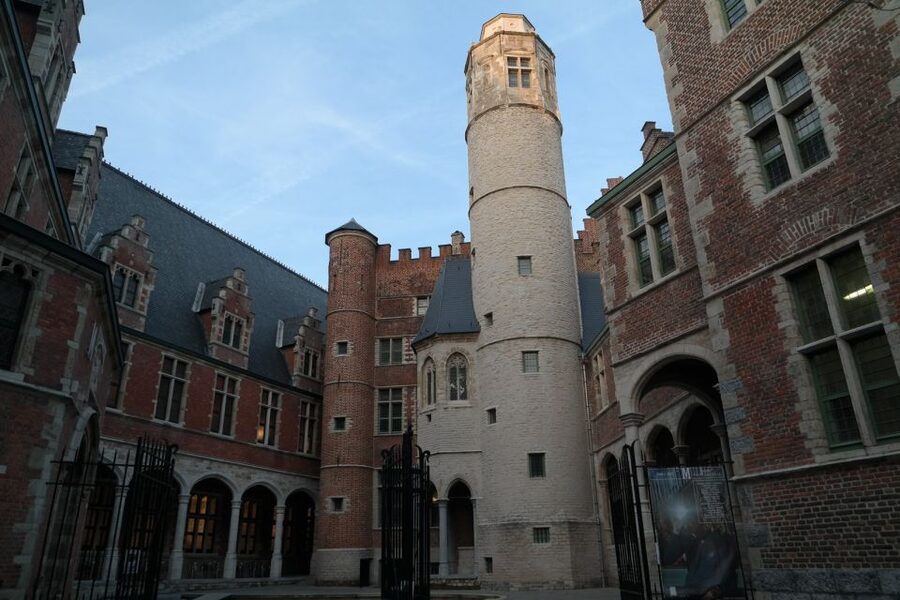
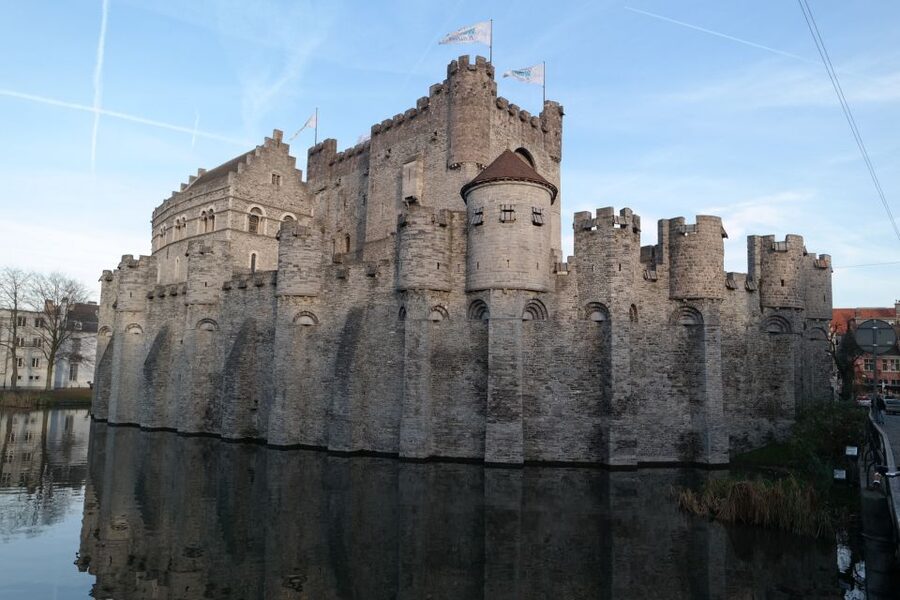
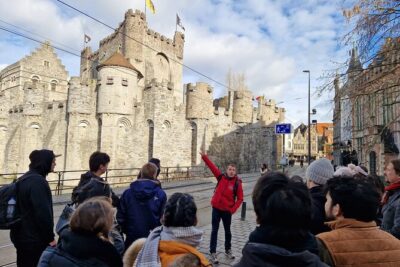
From there, you discover fortress Gerard de Duivelsteen and continue toward St-Bavo’s cathedral. Ghent’s water setting makes a big difference here. When you walk near the canals and waterways, the city feels alive and open, not boxed in like some older centers.
This part also comes with a long view. Ghent renovated major squares and buildings in preparation for a universal exhibition organized in 1913. That effort reshaped how parts of the city look and function today, including the Count’s Castle area. Even if you are not focusing on construction dates, you can feel that planning in the way some central spaces present themselves.
If you like to understand a place by reading it, this sequence is a good match. You see the fortress atmosphere, then shift to the cathedral zone where art becomes the main event.
A few more Ghent outings worth a look
- Ghent: Private 2-Hour Walking Tour
★ 4.7 · 134 reviews - Ghent: Famous Belgian Chocolate Walking Tour with Tastings
★ 5.0 · 131 reviews - Ghent: Guided Walking Tour and Canal Boat Trip
★ 3.8 · 128 reviews - Ghent Walking Tour with Optional Add-ons: Boat & Beer
★ 4.0 · 124 reviews
Belfry and Town Hall: Power, Trade, and the City’s Pride
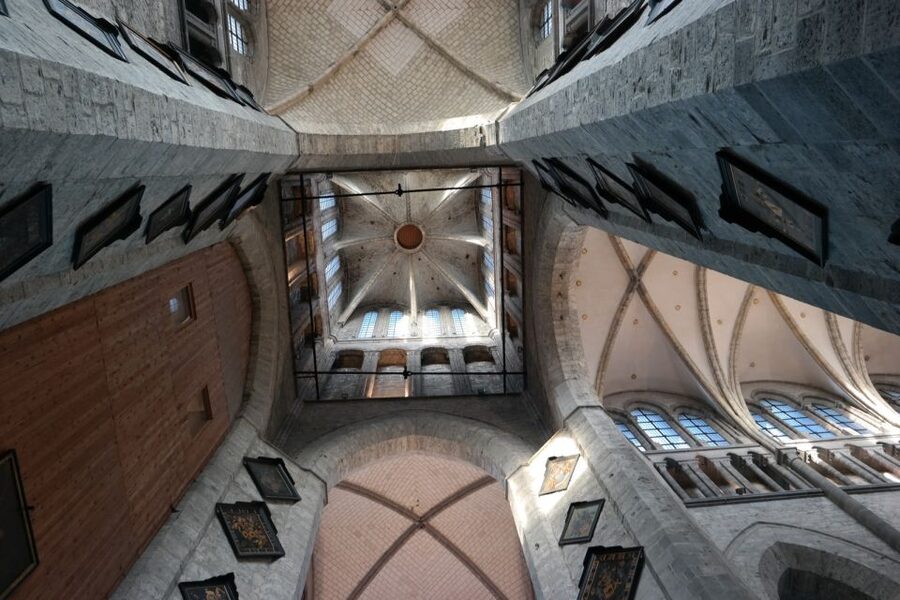
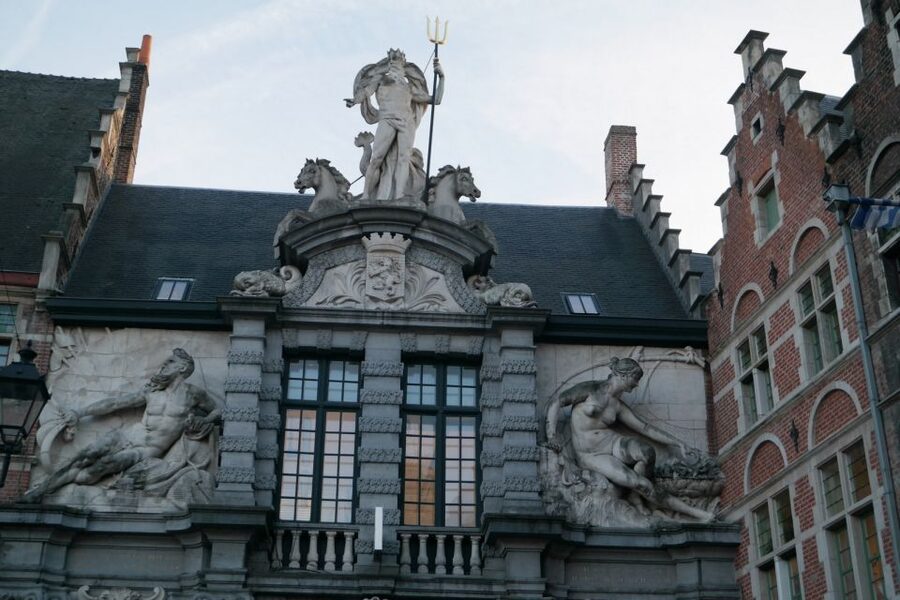
The route brings you to Ghent’s iconic civic center, including the Belfry and the Town Hall. These are the kind of buildings you do not need a guide to recognize, but you do want a guide to explain why they matter.
Ghent’s wealth historically flowed through trade and industry, and that shows in what the city decided to build and celebrate. The Belfry is a symbol of civic authority. The Town Hall reflects how Ghent managed its own affairs.
And the timing matters because you also get close to market energy. The tour includes the Friday market, one of Ghent’s most famous everyday scenes. Even if you visit outside of peak bustle, the area still feels designed for people to pass through, stop, and browse.
Friday Market, Fish Market, and Patershol: Medieval Life in Daily Form
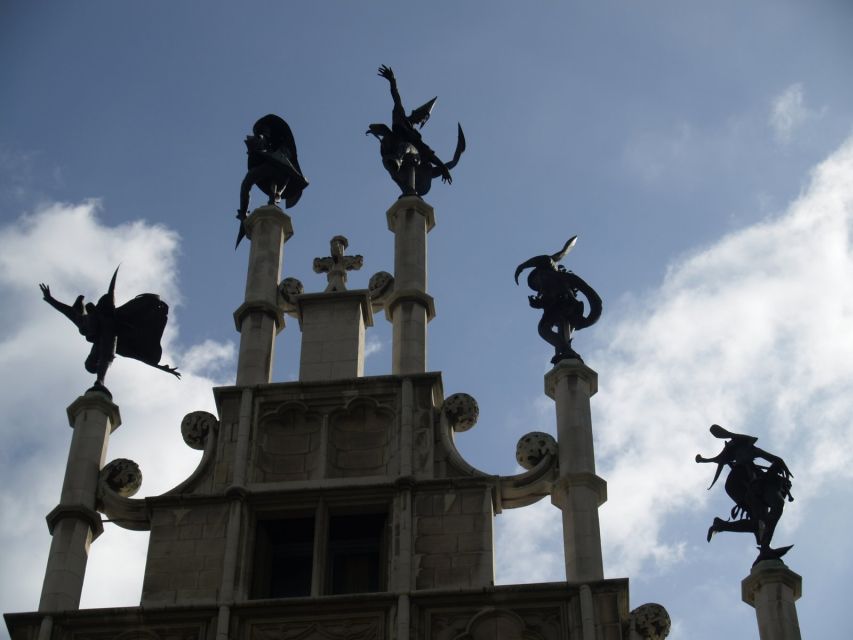
This is where Ghent starts to feel less like landmarks and more like a neighborhood.
You see the Friday market, then you move toward the old Fish Market area. The contrast is interesting. The market zones show Ghent’s practical side, the places where people came for food and routine. The walking route keeps the focus on what this area has been for a long time.
Then you reach Patershol, a historic area that many people associate with charm and character. In the flow of the tour, Patershol functions like a bridge between the market world and the harbor viewpoints. It is the kind of neighborhood stop where you can slow down for a minute and notice street layout, building lines, and how narrow lanes still make sense in a modern city.
Bonus value: the food and drink recommendations
The tour includes lots of recommendations on chocolate, waffles, beer, restaurants, bars, and museums. That is a real advantage because these are not generic tips. A good city guide helps you connect what you see to what you might want to try next.
You can use this during the rest of your day. For example, after the cathedral stop, you will be in a better position to choose where to eat and how to keep your day logical geographically.
Just remember: tastings and lunch are not included.
Old Harbor Views and the Three-Tower Skyline
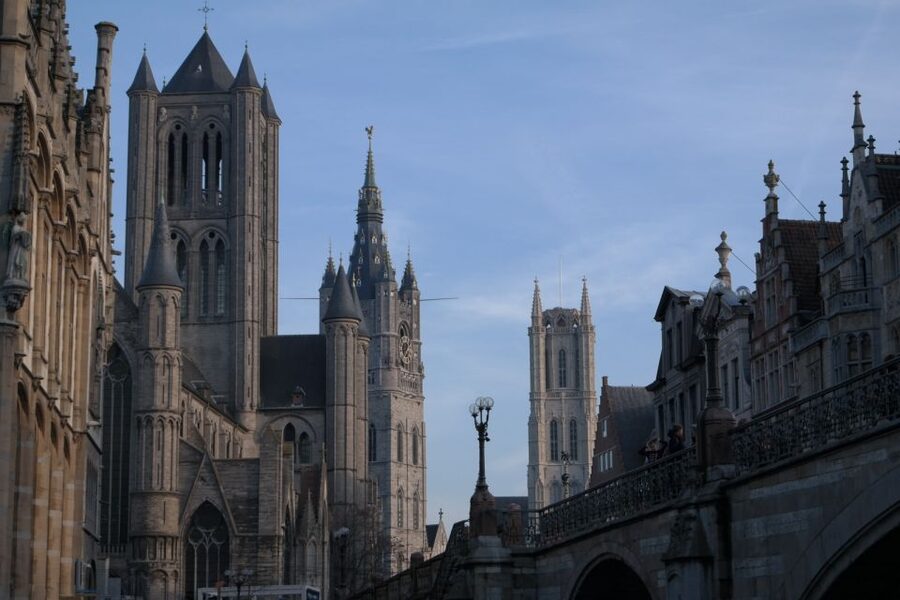
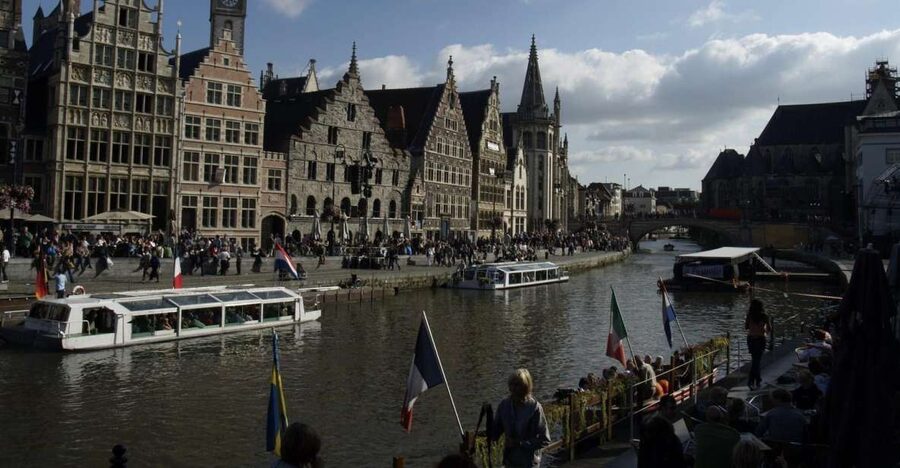
One of the strongest highlight moments is the old harbor viewpoint. This is where you get some of Ghent’s most satisfying angles.
The tour focuses on the finest views of St. Michael’s church and then ties directly into the city’s famous three towers. You will see:
- the tower of St. Nicholas’ church
- the Belfry
- the tower of St-Bavo’s cathedral
That trio is a big reason Ghent is photographed so often. Seeing all three in one visual framework gives you a clearer mental map of the city. It also helps you understand why Ghent feels like a collection of vertical landmarks. Towers act like navigation points, even when you are walking on streets that curve and shift.
Practical note: if it is a bright day, you may want to pause for a couple of minutes for photos. If it is overcast, the towers still read well, and the harbor area tends to feel calmer.
St-Bavo Cathedral: Mystic Lamb by Jan Van Eyck and Rubens Paintings
The final payoff lands at St-Bavo’s cathedral. This is where the tour becomes art-centered and you get the kind of stop that can change how you see a place.
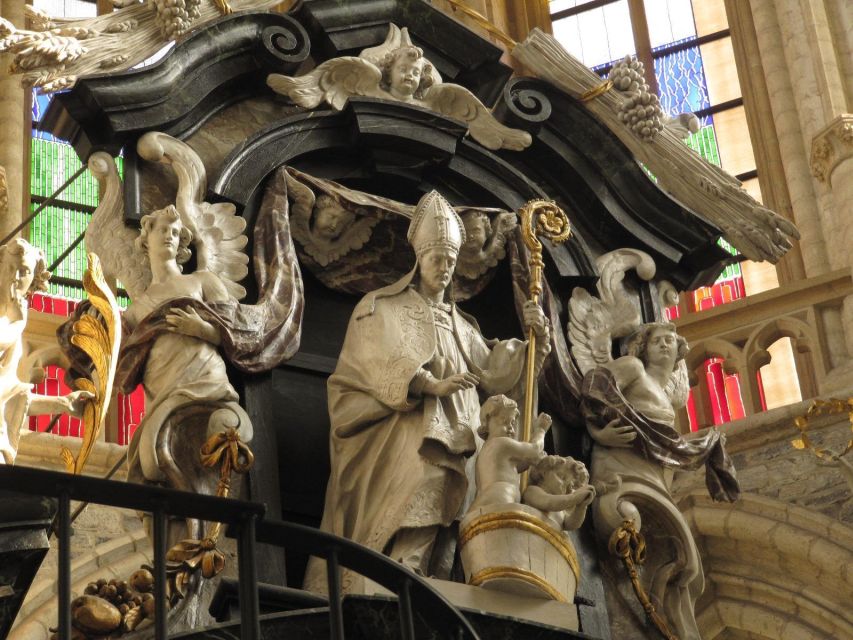
Inside, you get to admire paintings by Jan Van Eyck and Peter Paul Rubens. The highlight is the Mystic Lamb by Jan Van Eyck. Even if you have only seen reproductions before, the cathedral setting gives the work a different scale and gravity.
Why this stop is valuable: the walking tour does not just point at famous names. It frames the cathedral as the heart of Ghent’s identity. You started the day hearing about civic buildings and European institutions, and now you see why Ghent long ago mattered culturally as well.
This stop is also a reminder that Ghent’s fame is not limited to architecture. It has major art that sits at the crossroads of religion, politics, and patronage.
One caution: because the tour runs for 150 minutes total, cathedral time can feel like a concentrated visit. If you want slow, quiet looking, consider how you plan to handle photos versus reading. Decide in advance what you want to catch, then let the rest be a bonus.
What the 150 Minutes Means for Your Pace
A 150-minute tour is a sweet spot for many travelers, but it is still compact. You are doing bus riding plus walking plus major sight stops. That means you should treat the schedule as “efficient sightseeing,” not a leisurely drift.
Wear comfortable shoes. Bring a light layer if you run cold easily. And if you care most about specific highlights, aim your attention there first, then enjoy the rest as context.
The fact that this is a private group matters here. A private group up to 20 gives your guide room to adjust pace to your group. It usually feels better than a large fixed-departure tour where nobody can move at the same tempo.
Price and Value: $388 Per Group Up to 20
The price is $388 per group, with a maximum of up to 20 people. That pricing structure can be surprisingly good value if your group can fill seats.
Here is how to think about it. If you have a full group near 20, the cost per person drops a lot. If it is just a small party, the per-person price will be higher. Either way, you are paying for:
- a live guide (speaking Dutch, English, French, German)
- a guided bus overview plus a walking route
- structured time at the main landmarks, including St-Bavo Cathedral
Also note what is not included. Entrance fees are not included, and tastings and lunch are not included. The tour does include recommendations, which can help you spend your money smarter once the tour ends.
If you are the kind of traveler who wants a confident route and a local’s take, this format tends to pay off fast.
Who Should Book This Ghent Friday Market to Cathedral Tour
I think this tour fits best if you want three things in one go:
- You care about major landmarks like the Belfry, Town Hall, and St-Bavo Cathedral
- You want art context, including Jan Van Eyck and Peter Paul Rubens
- You like city understanding, not just a checklist, so the bus segments matter
It is also a strong fit for groups because it is private and designed for a group up to 20. If you are traveling with friends, a family group, a small club, or a group of coworkers who enjoy architecture and museums, this will feel like a smooth foundation day.
If you are the type who needs hours inside one building, you might find the cathedral stop more focused than slow. In that case, pair this tour with your own return later for deeper time.
Should You Book It?
Book it if you want an efficient, well-structured way to connect Ghent’s old-town sights with the city’s modern presence, and you want an art-centered finish at St-Bavo’s. The three-tower viewpoint at the old harbor and the focus on Van Eyck and Rubens are strong reasons to choose this route.
Pass or change plans if you are planning a slow museum day where time inside St-Bavo is your top priority. In that case, you may prefer an option that gives you more unhurried hours in one place.
FAQ
Where does the tour start?
The meeting point is Saint-Jacobschurch (Sint-Jakobskerk), where you can leave the coach.
How long is the tour?
The duration is 150 minutes.
What will I see on this tour?
You will see the Belfry, the Town Hall, the Friday market, the Fish Market and Patershol, views from the old harbor including St. Michael’s church, Ghent’s famous three towers, and art in St-Bavo’s cathedral by Jan Van Eyck and Peter Paul Rubens. You will also learn about the European Parliament Commission and Council buildings.
How much does it cost?
It costs $388 per group, up to 20 people.
What is included and not included?
Included are lots of recommendations to enjoy chocolate, waffles, beer, restaurants, bars, and museums. Not included are entrance fees, tastings, and lunch.
What languages does the guide speak?
The live guide speaks Dutch, English, French, and German.
More Shopping Tours in Ghent
- From Brussels: Maasmechelen Outlet Shopping Trip
★ 4.4 · 40 reviews - Market Tour and Cooking Lesson with a Belgian Gourmet Meal in a Brussels Home
★ 4.5 · 8 reviews
The latest Ghent write-ups
- Walking Food Tour in Ghent★ 5.0 · 13 reviews
- Ghent Walking Tour with Audioguide on Your Smartphone★ 4.5 · 13 reviews
- Discover Ghent while playing! Escape game – The Walter case★ 4.5 · 4 reviews
- Discover Mons while playing! Escape game – The alchemist★ 4.0 · 5 reviews
- Sunset cruise★ 5.0 · 19 reviews
- e-Scavenger hunt Mons: Explore the city at your own pace★ 5.0 · 4 reviews
- Discover Ghent while playing! Escape game – The alchemist★ 4.0 · 4 reviews
- Private Hidden Gems Walking Tour in Ghent★ 5.0 · 12 reviews
Walking Tours, compared.
Small Group Boat Cruise and Guided Walking Tour
Read our review →
Historical Walking Tour with Chocolate & Waffle Tasting
Read our review →
Brussels Walking and Tasting Tour (Beers,Chocolates&Fries/Waffle)
Read our review →
Browse the lists this tour appears in