
REVIEW · HISTORICAL TOURS
Historical Walking Tour: Legends of Gent
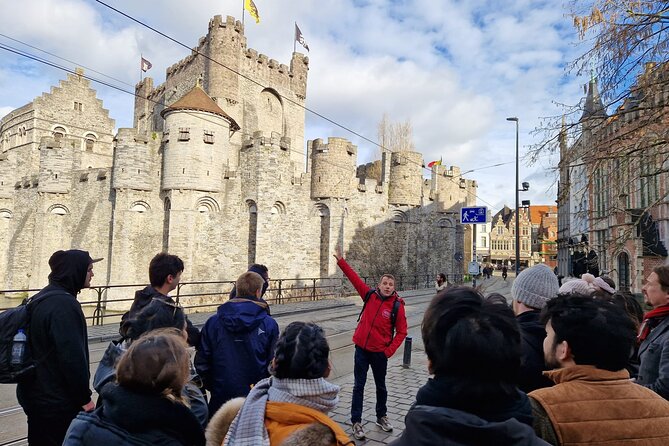
Ghent legends turn into a walk you can follow. This 2-hour route strings together the city’s medieval power points, from St Michael’s Bridge to the Belfry, with a local guide who explains what you are seeing and why it mattered. I like that it is built for understanding the city fast, not just collecting photos.
Two things I especially liked. First, the pay-what-you-want style makes it feel fair, and multiple guides were praised for earning tips through humor and storytelling (names like Tatiana, Kasia, Kenny, Sophia, and Robin show up in the feedback). Second, you get insider guidance on where to eat, drink, and explore right after you learn your way around the historic center.
One drawback to plan for: a few major stops list admission that is not included, so your total spend can rise if you want to go inside those sites. Also, it is a steady walk for around 2 hours, so it is not the best choice if you want a slow museum-style visit.
In This Review
- Key highlights that make this tour work
- St Michael’s Bridge to the Belfry: the smart way to start in Ghent
- Stop by stop: how each landmark adds a piece of the Ghent story
- St Michael’s Bridge: medieval trading crossroads and the skyline towers
- Graslei and Korenlei: the port heartbeat of the historic center
- Design Museum Gent: rebellion in a design package
- Het Groot Vleeshuis: a butcher hall with a darker edge
- Gravensteen: a castle built into everyday city life
- St. Veerleplein: the square of death, and the square of life
- Huis van Alijn: the hospital story behind a surviving god house
- Vrijdagmarkt: the square and the figure in the middle
- Werregarenstraat: a graffiti solution, and an art scene outlet
- Ghent Town Hall (Stadhuis): a building that reflects conflict
- St. Bavo’s Cathedral: the Van Eyck moment without the museum rush
- Het Belfort van Gent: the people’s tower, former prison, and legend on the façade
- Esglesia de Sant Nicolau: the ending with the merchant protector
- What you get from the guide: humor, stories, and next-step tips
- Price and value: why a pay-what-you-want model can be a bargain
- Pacing and comfort: what to expect on your feet
- Who should book this Legends of Gent tour
- Should you book Legends of Gent? My call
- FAQ
- FAQ
- How long is the Legends of Gent walking tour?
- What is the meeting point for the tour?
- Where does the tour end?
- Is the tour offered in English?
- How much does the tour cost?
- Are admissions included for all stops?
- Do I need a physical ticket?
- What is the group size?
- Is there a weather requirement?
- Are refunds available if plans change?
- Are service animals allowed?
Key highlights that make this tour work
- A pay-what-you-want format that rewards guides who keep you engaged
- A tight 2-hour route that covers the city’s most iconic medieval corners
- St Michael’s Bridge tower views that set up what you will see all day
- Trade-focused stops like Graslei and Korenlei, tied to Ghent’s port life
- A story-driven ending at the Belfry and St Nicholas area, wrapping the themes neatly
- Practical local tips on food, drink, and what to do next
St Michael’s Bridge to the Belfry: the smart way to start in Ghent
If you only have one short window to get oriented, this is a strong pick. The tour moves through the core of Ghent in about 2 hours, with a pace that keeps things lively and gives you enough context to enjoy the city after.
It starts at Hostel Uppelink on Sint-Michielsplein 21, then finishes at the Belfry area (Belfort van Gent). Along the way, you will hit the big “how Ghent works” places, so you stop seeing buildings as random and start seeing them as a connected story.
One practical note: the experience is offered in English, and it runs with a maximum group size of 35. That size is big enough to meet fellow visitors, but small enough that you are not lost in a crowd of strangers.
More Historical Tours in Ghent
- Ghent: 40-Minute Historical Boat Tour of City Center
★ 4.3 · 430 reviews - Private Historical Tour: The Best of Ghent
★ 5.0 · 115 reviews - Bicycle tour in historic Ghent
★ 5.0 · 87 reviews
Stop by stop: how each landmark adds a piece of the Ghent story
St Michael’s Bridge: medieval trading crossroads and the skyline towers
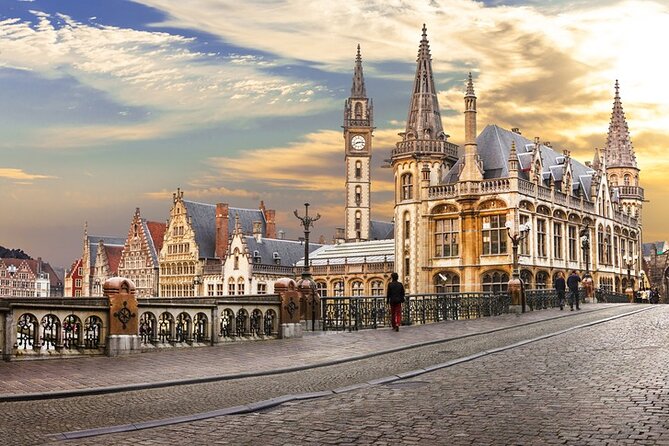
The first stop is St Michael’s Bridge, where your guide frames Ghent as a medieval trading hub. You also get the key visual cue of the day, the way the city’s tower skyline lines up from this angle. If you like architecture, this is a great warm-up because it tells you what to notice as you walk.
This is also where the guide sets the tour’s main theme: Ghent’s power came from commerce and civic independence, not royal courts. That theme keeps popping up later, especially around the squares and the Belfry.
Graslei and Korenlei: the port heartbeat of the historic center
Next comes Graslei and Korenlei, the beating heart of the city center. Here you learn which buildings were involved in trading activities when this area functioned like a port.
This stop is valuable because it turns what looks like a scenic canal scene into a working system. You begin to understand why merchants, ships, and public spaces shaped the city’s layout.
More Walking Tours in Ghent
- Ghent: Belgian Chocolate Walking Tour with Tastings
★ 4.9 · 259 reviews - Gastronomic Walking Tour of Gent – Tasters included
★ 5.0 · 199 reviews - Ghent: Private 2-Hour Walking Tour
★ 4.7 · 134 reviews - Ghent: Famous Belgian Chocolate Walking Tour with Tastings
★ 5.0 · 131 reviews
Design Museum Gent: rebellion in a design package
Then you reach Design Museum Gent, where the guide explains why a particular aspect of the museum symbolizes the stubborn, rebellious mindset of the Gentenaars. The admission for this stop is not included, so this part is a good example of how the tour is mostly about interpretation, not guaranteed inside-hours.
If you are the type who likes meaning behind objects, this stop is worth paying attention to. If you are only here for classic church and castle views, you can still enjoy it, just expect a different angle on Ghent’s identity.
Het Groot Vleeshuis: a butcher hall with a darker edge
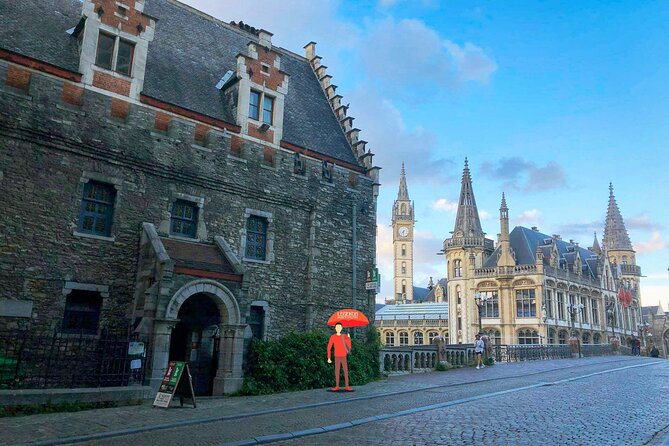
At Het Groot Vleeshuis, you get a view of the medieval covered Great Butchers’ Hall across the water. This stop is not just “pretty old building” talk. The guide shares the darker facts behind the hall, which changes how you see the stonework.
What I like about this stop is the tonal shift. It reminds you that medieval Ghent had industry and hard realities, not just pageantry.
Gravensteen: a castle built into everyday city life
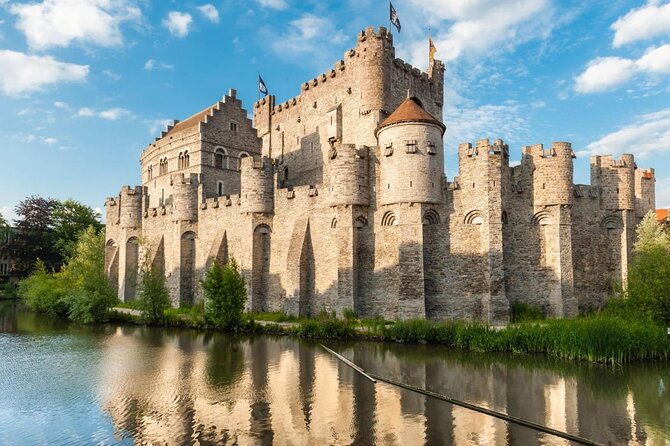
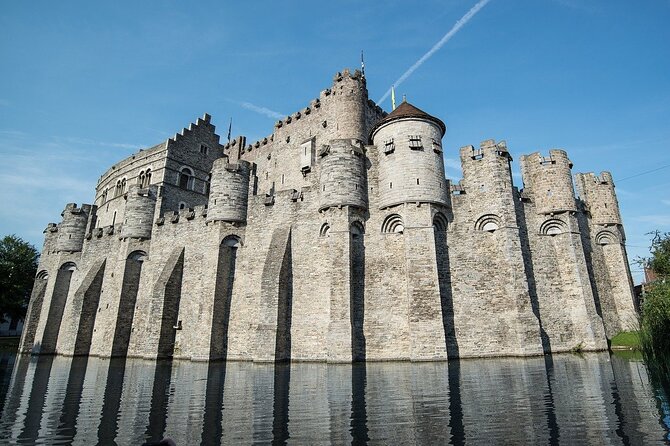
Gravensteen is next, the medieval Castle of the Counts. The big thing here is that unlike many castles, this one sits right in the city and is very well preserved.
Admission is not included for this stop, so if you want to go in, you will likely pay separately. Even from the outside, the castle feels important because it is so integrated into the streets around it, which supports the tour’s point about civic power being visible and practical.
St. Veerleplein: the square of death, and the square of life
At St. Veerleplein, your guide explains why the square carries both a frightening nickname and a more hopeful one. The contrast is part of the charm, because Ghent’s history can feel grim and uplifting in the same breath.
This stop works well for photos too, because it anchors the tour’s storytelling in a real public space. You are not just looking at monuments, you are learning how people used squares day to day.
Huis van Alijn: the hospital story behind a surviving god house
Then comes Huis van Alijn. This place used to be a hospital, and it is described as the only remaining god house.
The guide focuses on how it became a hospital, turning the architecture into a clue about community care and need. It also gives the tour more emotional range than the usual “kings, battles, and walls” pattern.
Vrijdagmarkt: the square and the figure in the middle
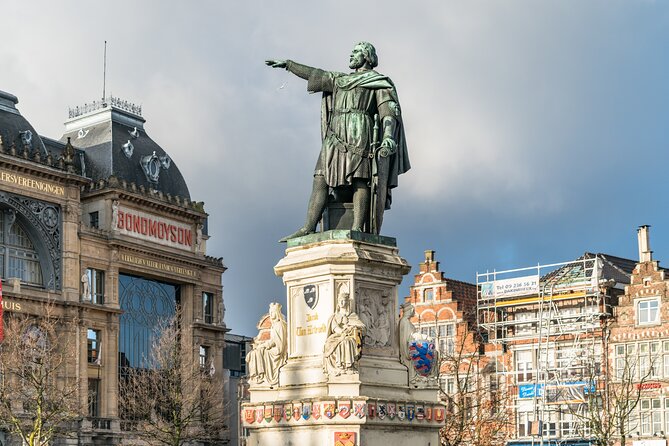
At Vrijdagmarkt, the square’s role in Ghent’s history becomes the main storyline. You also learn about the man whose statue sits in the middle, and why he matters.
This is a great stop if you like civic history, because the guide ties public space to identity. After this, you are ready for the tour’s power symbols.
Werregarenstraat: a graffiti solution, and an art scene outlet
Werregarenstraat is next, and it is all about street art with rules. The city designated a specific area so monumental buildings are not sprayed by graffiti, while artists still get a place to work.
Even if you do not care about street art, this stop is useful. It shows you how Ghent manages culture instead of pretending it does not exist.
Ghent Town Hall (Stadhuis): a building that reflects conflict
Ghent Town Hall is a key civic stop, but the tour makes it more interesting by focusing on why the hall looks a little “confused.” Your guide connects that look to the most significant conflict in Ghent’s history.
Admission is not included, so this is largely about what you see and how it connects to the city’s political past. If you enjoy architecture with a backstory, this one clicks.
St. Bavo’s Cathedral: the Van Eyck moment without the museum rush
St. Bavo’s Cathedral comes next, and you are pointed toward the art treasures inside, most notably the world-famous Ghent Altarpiece by the brothers Van Eyck. Admission is listed as free for this stop.
Even if you do not plan to go deep into interior viewing, the guide’s context helps a lot. The cathedral stops feeling like a random “big church” and becomes the city’s cultural statement.
Het Belfort van Gent: the people’s tower, former prison, and legend on the façade
At the Belfry, the tour shifts from art back to civic power. Your guide explains why it is the people’s tower and how it reflects Ghent’s stubborn independence. The façade is also tied to a former prison and a bizarre legend the guide shares.
Admission is not included for this stop, but since this is also the tour’s end area, you still get the main wrap-up. If you want to go in, plan for separate entry.
Esglesia de Sant Nicolau: the ending with the merchant protector
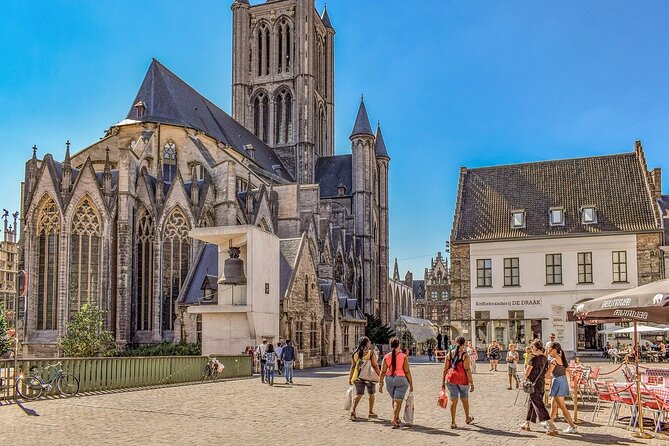
The final stop is Esglesia de Sant Nicolau, looking out over Korenmarkt. This early 12th-century church honors St Nicholas, protector of merchants and sailors, and the façade reflects the legend connected to his symbolism.
Admission is listed as free. This ending is smart because it brings the tour back to trade and everyday people, which is the thread running through the whole walk.
What you get from the guide: humor, stories, and next-step tips
The guides are the real engine here. A ton of the feedback praises storytelling with humor, and many names come up repeatedly, including Tatiana, Kasia, Kenny, Sophia, Robin, and Florian.
You also get practical value, not just background lectures. The tour includes insider tips on where to eat, drink, and explore, which is ideal if you want your first night in Ghent to be more than walking around with an internet map.
One more detail I think matters: the group is capped at 35, and in at least some cases guides use a microphone so bigger groups can still hear clearly. That helps the tour feel comfortable instead of chaotic.
Price and value: why a pay-what-you-want model can be a bargain
The listed price is $3.62 per person, and the tour is structured so you pay what you think it is worth at the end. That combination is part of the appeal. You are not locked into a fixed premium, and you can match your tip to the experience level you felt you received.
Even without going into ticketed sites, the walk gives you a whole framework for Ghent. You learn the port logic of Graslei and Korenlei, the civic power signals of the Town Hall and Belfry, and the cultural anchor of St. Bavo’s Cathedral and the Van Eyck connection.
Be aware of one money consideration: some stops list admission not included, like Design Museum Gent, Gravensteen, Ghent Town Hall, and the Belfry. If you only observe, your cost stays low. If you decide to enter, you should budget for those extra tickets.
Pacing and comfort: what to expect on your feet
This is a walking tour that keeps you moving. Reviews note it is about 2 hours on foot, and most people should be fine with the pace.
Bring comfortable shoes, especially if the weather is warm or the ground feels slick. You will also be outside for long stretches, so pick clothing you can handle for a couple of hours in the open.
Also, if you are someone who loves long stops, you might feel the tour’s forward momentum. The good news is you get the context quickly, then you can return later to the places you want to linger.
Who should book this Legends of Gent tour
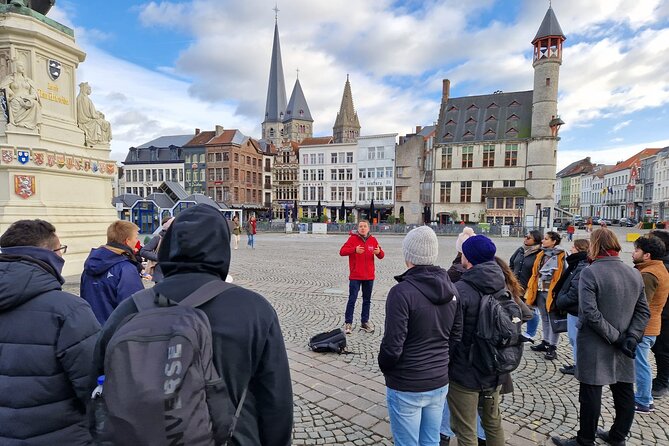
This tour is a strong fit if you want:
- A first-time orientation to Ghent’s center
- A route that connects places to people, trade, and civic identity
- A short, guided overview that leaves you time afterward
It is also a good match if you like guides who use humor and keep a large group engaged. If you prefer silent self-guided exploring only, you might find the storytelling a little too constant.
If you are traveling with kids, the tour length and stop frequency can work, as long as your group enjoys history as stories rather than textbooks.
Should you book Legends of Gent? My call
Yes, I would book it if you want to understand Ghent fast and spend your next hours exploring with real context. The pay-what-you-want style makes it easy to justify, and the itinerary covers the city’s biggest “why does this matter” points in about 2 hours.
Skip it only if you hate walking, dislike guided storytelling, or you are planning a day where every stop must be ticketed and inside-focused. Otherwise, this is a practical, good-value way to turn Ghent from a postcard into a place you actually understand.
FAQ
FAQ
How long is the Legends of Gent walking tour?
It runs for about 2 hours.
What is the meeting point for the tour?
The start is Hostel Uppelink at Sint-Michielsplein 21, 9000 Gent, Belgium.
Where does the tour end?
It ends at the Belfry of Ghent, Sint-Baafsplein, 9000 Gent, Belgium.
Is the tour offered in English?
Yes, it is offered in English.
How much does the tour cost?
The price is $3.62 per person, and there is a pay-what-you-want element at the end based on your experience.
Are admissions included for all stops?
No. Some stops list admission not included, while others are free. You may need to pay separately if you want to enter those specific locations.
Do I need a physical ticket?
You use a mobile ticket.
What is the group size?
The tour has a maximum of 35 travelers.
Is there a weather requirement?
Yes. It requires good weather. If it is canceled due to poor weather, you will be offered a different date or a full refund.
Are refunds available if plans change?
Free cancellation is available up to 24 hours in advance for a full refund.
Are service animals allowed?
Yes, service animals are allowed.
The latest Ghent write-ups
- Walking Food Tour in Ghent★ 5.0 · 13 reviews
- Ghent Walking Tour with Audioguide on Your Smartphone★ 4.5 · 13 reviews
- Discover Ghent while playing! Escape game – The Walter case★ 4.5 · 4 reviews
- Discover Mons while playing! Escape game – The alchemist★ 4.0 · 5 reviews
- Sunset cruise★ 5.0 · 19 reviews
- e-Scavenger hunt Mons: Explore the city at your own pace★ 5.0 · 4 reviews
- Discover Ghent while playing! Escape game – The alchemist★ 4.0 · 4 reviews
- Private Hidden Gems Walking Tour in Ghent★ 5.0 · 12 reviews
Historical Tours, compared.
Historical Tour with Chocolate & Waffle Tasting
Read our review →
Historical Walking Tour with Chocolate & Waffle Tasting
Read our review →
THE Storytelling Tour of Bruges | First Day Must | History & Tips
Read our review →
Private Historical Tour: The Highlights of Bruges
Read our review →Browse the lists this tour appears in