
REVIEW · ART NOUVEAU TOURS
Brussels: Art Nouveau Private Walking Tour with Horta Museum
Art Nouveau hits Brussels like a fashion trend you can actually walk through. This private tour connects the Delune Area façades, the famous Art Nouveau icons, and then gets you inside the Horta Museum with an expert guide. I love the focused route and the way the guide points out what to look for in each building, not just what it is. One catch to keep in mind: most of the stops are exterior views, so if you’re hoping for a house-to-house interior tour, this one will feel a bit more like an architectural walk than a full “see everything inside” marathon.
You start at Café Belga and spend about 3 hours moving through some of Brussels’ best-known early-1900s streetscapes, with quick passes timed so you still end with a guided visit in Victor Horta’s own home. The guide experience is the main ingredient, and quality varies, so you’ll want to choose carefully if you care about lots of historical context as you go.
In This Review
- Key things you’ll notice on this Art Nouveau route
- Starting at Café Belga, the route already has a point
- The Delune Area and Place Eugène Flagey: where the style starts feeling alive
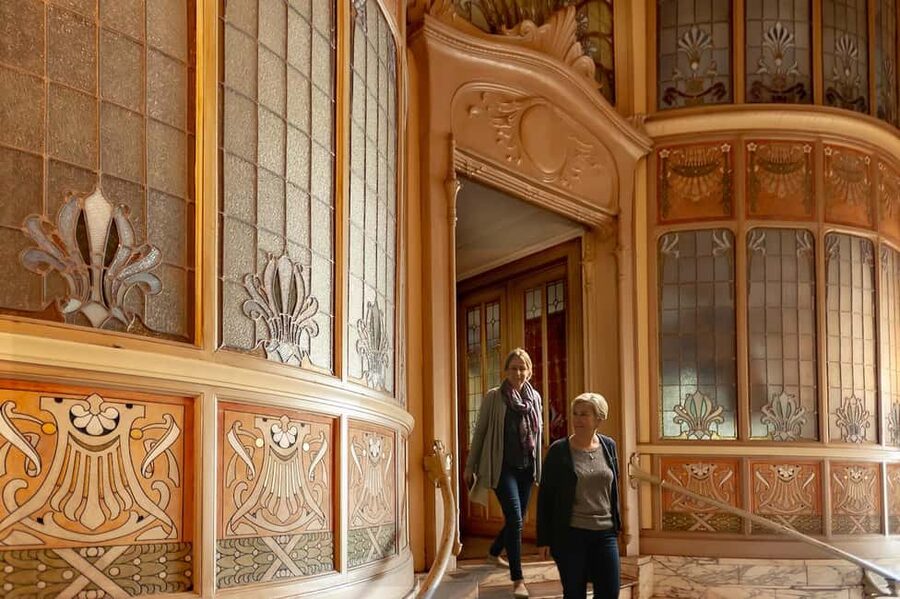
- Hôtel Solvay: light, color, and craftsmanship you can read from the street
- Hotel Tassel exterior: the world’s first true Art Nouveau house
- Maison Roosenboom and the idea of architecture as a whole artwork
- Hotel Otlet and Hôtel Ciamberlani: the intellectual side of Art Nouveau
- Maison Hankar: bridging historicism and innovation
- Maison Hannon and the walk along Chaussée de Charleroi (and Rue Defacqz)
- Inside the Horta Museum: this is the heart of the tour
- Price and value: is $150 per person worth it?
- Who this tour suits best
- Should you book it?
- FAQ
- How long is the Brussels Art Nouveau Private Walking Tour with Horta Museum?
- Where do you meet for the tour?
- Is it a private tour or a group tour?
- What is included with the tour?
- Do I need to buy tickets for the other buildings on the route?
- How does the skip-the-line entry work?
- What languages are the live guides available in?
- Is the tour wheelchair accessible?
- Is lunch included?
- What if I need to cancel?
Key things you’ll notice on this Art Nouveau route
- Café Belga to the Delune Area, a smart starter zone for Sterner’s Studio and nearby façades
- Skip-the-line access to the Horta Museum, plus a guided visit inside the house
- Hotel Tassel exterior, often credited as the world’s first true Art Nouveau home
- Hôtel Solvay and Hotel Otlet, where light, color, and symbolic details get explained clearly
- Maison Hankar to Maison Hannon, a nice bridge from historicism to more futuristic, artistic design
Starting at Café Belga, the route already has a point
Meeting at the entrance of Café Belga is convenient, and it also sets the tone. You are not starting in a museum, you’re starting in the city, which matters because Art Nouveau in Brussels is more than a style you see in one landmark. It’s a way of thinking about curves, materials, structure, and everyday street life.
From the first part of the walk, you get the rhythm of how the tour works. You’ll have short, purposeful looks at key buildings, then longer guided time where it counts most, the Horta Museum. That pacing is practical. In a 3 hour window, it keeps you moving without turning every stop into a rushed photo sprint.
If you want a tour that helps you decode the details, this format is a good fit. Your guide can point out what to notice before you move on. That’s the real value of a private guide on architecture, you get direct attention and you can ask questions while you still remember what you just saw.
More Museum Visits in Brussels
- Brussels: Atomium Entry Ticket with Design Museum Ticket
★ 4.4 · 9,254 reviews - Choco-Story Brussels: Chocolate Museum Entrance with Tasting
★ 4.3 · 4,883 reviews - Brussels: Chocolate Museum Visit with Workshop
★ 4.6 · 1,474 reviews
The Delune Area and Place Eugène Flagey: where the style starts feeling alive
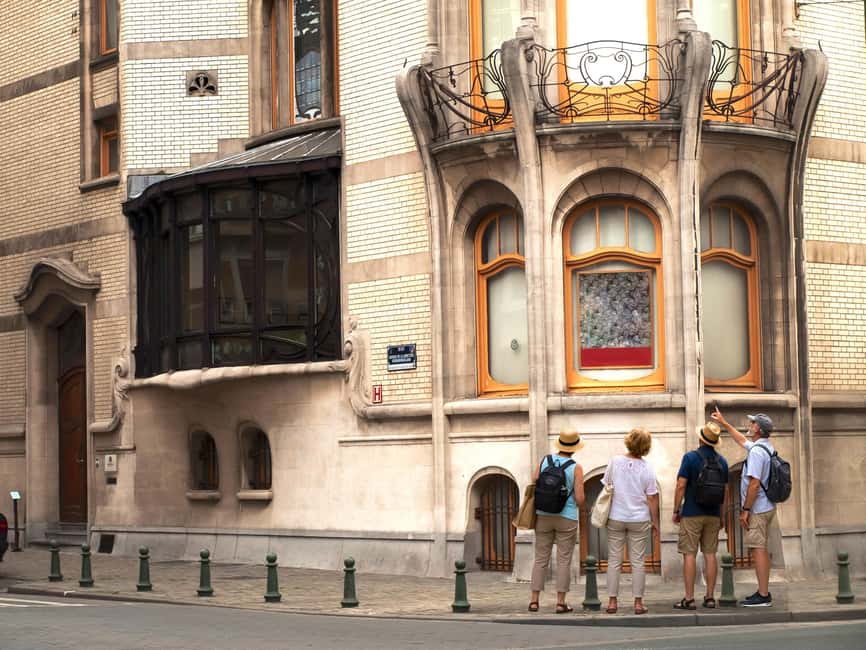
The tour begins in the Delune Area, known for its early Art Nouveau street presence and for the Sterner’s Studio façades. Even before you hit the big-name houses, you’ll start spotting the building language. Think of decoration that looks connected to the structure, not stuck on top. You’ll also notice how the façades use plant-like curves and expressive lines to soften straight streets.
Along the way, you pass Place Eugène Flagey. This is a “get your bearings” moment. You’re moving from one pocket of architecture to another, and this pass helps you orient your sense of space before you step into the most famous names.
Practical tip: bring your eyes, not your checklist. The exterior stops can feel similar if you treat them like museum labels. If you let your guide steer you to the specific design elements, the façades start talking to each other.
Hôtel Solvay: light, color, and craftsmanship you can read from the street
Next up is Hôtel Solvay, one of Victor Horta’s major works. The description you’ll hear is clear: it’s a masterpiece of light, color, and craftsmanship. Here’s why that matters, even on an exterior viewing tour. When you stand outside, you start to understand that Art Nouveau is not just about pretty shapes. It’s also about how a space is meant to feel, and how materials and details guide your eye.
You’ll likely get direction on where to focus, such as how the façade frames the entry and how decorative motifs relate to the building’s overall composition. Even from outside, you can start connecting the style to the architect’s bigger ideas about modern living.
If you love design that feels intentional rather than random, this stop usually delivers. Solvay is the kind of building that makes you think, the architect had a plan for every inch.
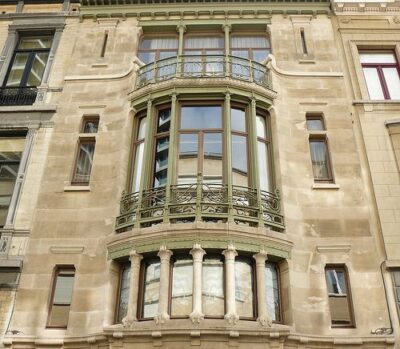
Hotel Tassel exterior: the world’s first true Art Nouveau house
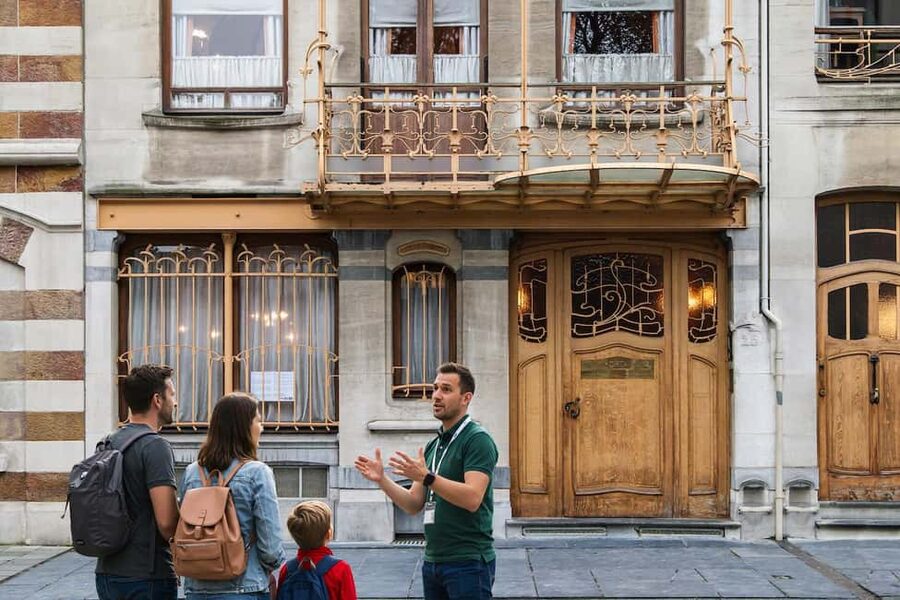
Then comes Hotel Tassel, described as the world’s first true Art Nouveau house. That’s a big claim, but you don’t have to accept it blindly. Your guide’s job is to translate the importance into what you can actually see.
On an exterior-only viewing stop, focus on the idea that Tassel helps define the look of the “real” Art Nouveau house. Instead of a façade that pretends to be traditional, it signals a break. You’re looking for a new kind of unity between ornament and architecture.
This is also where the tour becomes more than aesthetics. If you care about design history, Tassel is one of those “hinge point” moments that helps you understand why Brussels became a hotspot for Art Nouveau.
Quick watch-out: because this stop is short, you should ask one question early, something like what motif or feature is the key to understanding this house. Otherwise, you can stand there looking at everything and absorb almost nothing.
More Walking Tours in Brussels
- Brussels: Historical Walking Tour with Chocolate & Waffle Tasting
★ 5.0 · 1,165 reviews - Brussels Walking and Tasting Tour (Beers,Chocolates&Fries/Waffle)
★ 5.0 · 929 reviews - Brussels Chocolate Walking Tour and Workshop
★ 4.5 · 885 reviews - Brussels: City Highlights Walking and Tasting Tour
★ 4.9 · 505 reviews
Maison Roosenboom and the idea of architecture as a whole artwork
Next is Maison Roosenboom, where the framing is that architecture becomes a total work of art. That phrase sounds dramatic, but on this kind of tour it’s actually useful. It hints that you shouldn’t only look at the façade. You’re meant to think of the building as a coordinated design, with details that support one another.
Even without entering, you can usually spot how the façade’s components follow a consistent theme, and how the building’s expression stays consistent instead of switching styles halfway through.
This stop also works well if you like symbolism or visual storytelling. Your guide can help you read the design like a message rather than a decorative collage.
Hotel Otlet and Hôtel Ciamberlani: the intellectual side of Art Nouveau
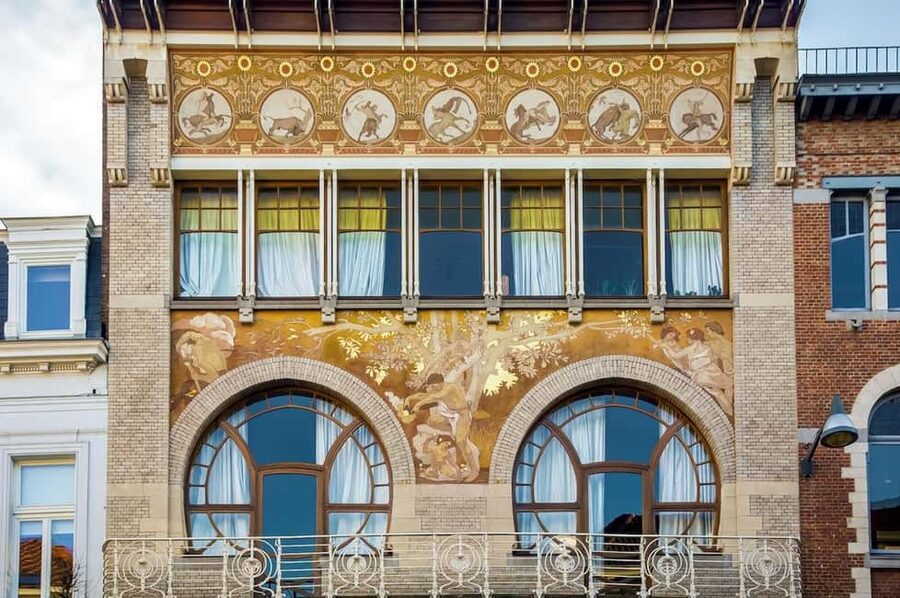
Two stops in this stretch bring a different tone.
You’ll see Hotel Otlet, described as offering intellectual elegance. Then there’s Hôtel Ciamberlani, where the tour highlights symbolic details.
This is a good part of the tour for anyone who gets bored when architecture is treated as only shapes. Art Nouveau in Brussels often uses motifs to suggest ideas, not just to fill space. Your guide can help you notice how symbolism shows up in the façade language.
From a value point of view, this is where a private guide can really justify the price. A general walking tour might mention “ornament” and move on. Here, you have a chance to connect the motifs to why the building mattered to its owner and its era.
Maison Hankar: bridging historicism and innovation
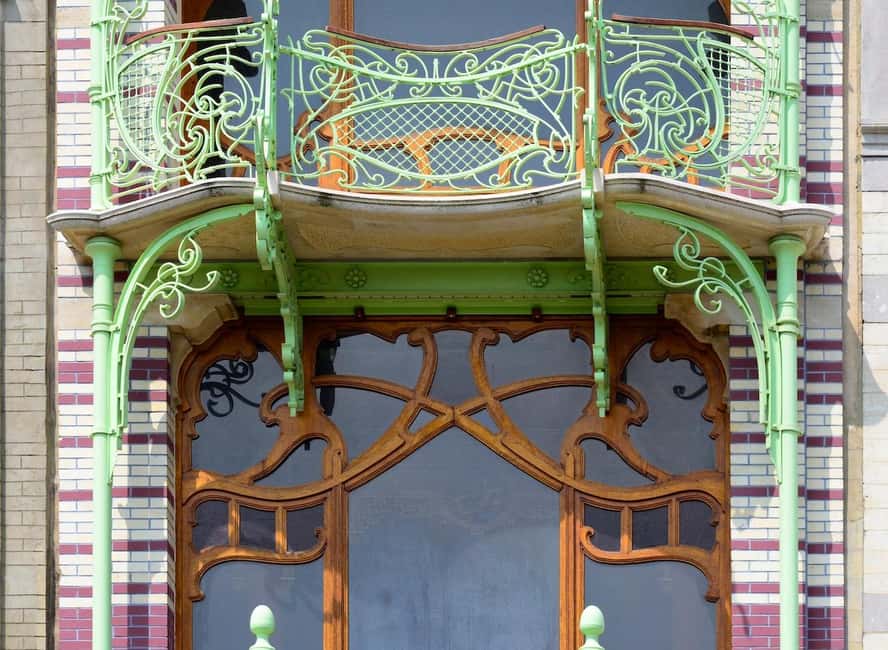
Then comes Maison Hankar, presented as a creation that bridges historicism and innovation. That description is a gift for you as a visitor. It helps you understand a lot of what you see in Brussels Art Nouveau without turning it into a history lecture.
You can think of it like a transition building. You’ll likely see elements that still feel rooted in older European building habits, but expressed with newer design energy. It’s not only about style, it’s about how architects were negotiating change at the time.
If you’re the kind of person who likes to understand how styles evolve, this stop tends to click.
Maison Hannon and the walk along Chaussée de Charleroi (and Rue Defacqz)
After Maison Hankar, the route includes Maison Hannon in Saint-Gilles, with its “dreamlike artistry” and refined design. This is where the tour adds a more emotional, artistic flavor. You’re meant to feel that Art Nouveau could be playful, poetic, and expressive, not only formal.
Right after that, you move along Chaussée de Charleroi and Rue Defacqz. This is where the city itself helps tell the story. The tour framing here is important: you’re tracing the evolution of Brussels’ architectural identity, from neoclassical to modern.
So even if a particular façade doesn’t strike you immediately, the street comparison can. When you walk the transitions, you start to see why Art Nouveau wasn’t just a one-off style. It was part of a larger shift in what people wanted cities to look like.
Practical tip: wear shoes that let you keep pace. The route is built on quick, focused exterior looks. If your legs feel bad, you’ll start skipping details, and that’s where the guide guidance matters most.
Inside the Horta Museum: this is the heart of the tour
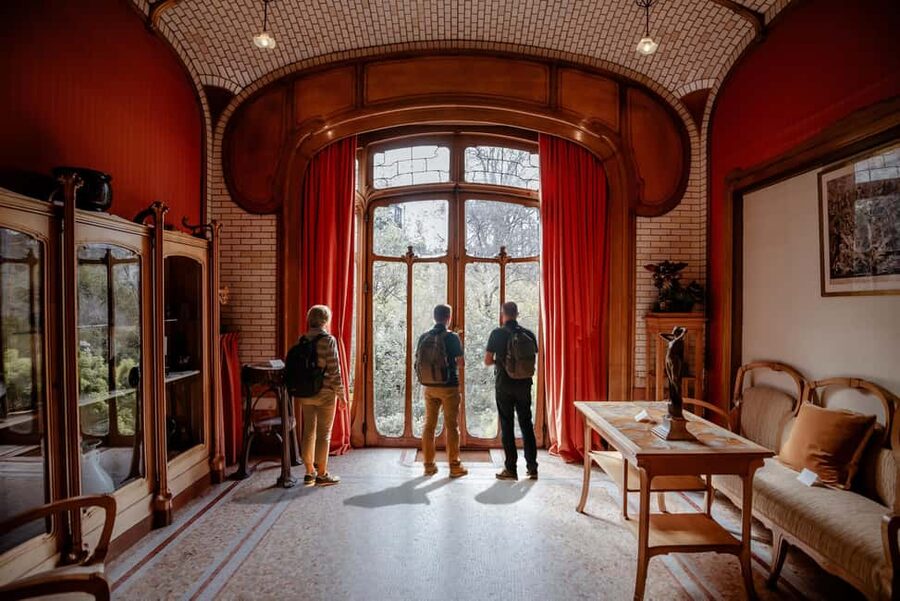
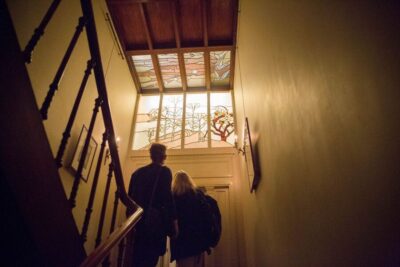
The final stretch is the Horta Museum, with a guided visit inside Victor Horta’s own home. This is where the tour earns its reputation. You get skip-the-line access, plus a guided experience once you’re inside, with an estimated guided time of 41 minutes.
Why this matters: Art Nouveau makes more sense when you see how it behaves in three dimensions. On the street, you read the façade. Inside, you can understand how the design language flows, how curves relate to daily movement, and how light shapes the space.
Also, there’s a real practical advantage to having the guide inside the museum with you. The Horta Museum is not just about admiring rooms. It’s about understanding the architect’s intent, and a good guide can point out what most visitors miss.
Note on quality control: one of the downsides that showed up in feedback involved a guide who did not have museum tickets properly handled. This seems like a rare failure of service, but it’s still smart to verify that your Horta Museum skip-the-line tickets are already secured for the day you booked. Included tickets are part of the value here, so you don’t want that moment to turn stressful.
Price and value: is $150 per person worth it?
At $150 per person for a 3-hour private tour, the value depends on what you want out of the experience.
If your goal is to get a clear guided explanation of multiple major buildings in a short window, private is a strong option. You’re paying for time, coordination, and an expert guide who can direct your attention at each stop. For architecture lovers, that’s often money well spent because you get context while you’re still standing in front of the features.
If your priority is getting inside every building, or spending long stretches sitting and reading, you might feel shortchanged. The tour is built primarily around exterior looks, with the main interior payoff at the Horta Museum.
So I’d frame it like this:
- Worth it if you want a guided “best of” Art Nouveau route with a serious finishing stop inside Horta’s house.
- Less worth it if you specifically want interior access to lots of other houses and hotels, because only the Horta Museum includes a guided inside visit.
Who this tour suits best
This tour fits you if you are:
- an architecture or design fan who likes your details explained in plain language
- interested in the specific Brussels Art Nouveau names, not just a general “pretty buildings” walk
- okay with shorter exterior stops as long as the guide teaches you what to notice
It may not fit you as well if you:
- want long interior visits at multiple properties
- dislike walking for a few hours with several quick looks
The private setup is also a plus if you prefer to set your own pace. And the guide languages include English, French, and German, so you should be able to match your comfort level.
Should you book it?
Yes, I’d book it if you want the best blend of “walk the city” and “get into the important room.” The standout value is the combination of a focused Art Nouveau route and skip-the-line Horta Museum access with a guide who can connect the façades to the interior design ideas.
Before you confirm, do two quick checks in your own planning:
- Make sure you’re comfortable with exterior views for the houses and hotels. The real interior time is at the Horta Museum.
- Expect the guide to do active teaching at each stop. If you care about deep historical interpretation, consider asking about the level of detail you’ll get when you book.
If that matches your travel style, this is a smart way to experience Brussels Art Nouveau without losing your whole day to logistics.
FAQ
How long is the Brussels Art Nouveau Private Walking Tour with Horta Museum?
The tour lasts about 3 hours.
Where do you meet for the tour?
You meet at the entrance of the café.
Is it a private tour or a group tour?
It is a private group tour.
What is included with the tour?
You get Horta Museum skip-the-line tickets and a guided visit inside the Horta Museum, along with a private expert guide for the 3-hour walking portion.
Do I need to buy tickets for the other buildings on the route?
No. Only the Horta Museum tickets are included. Tickets for the other houses or hotels are not included.
How does the skip-the-line entry work?
The tour includes skip-the-line access through an express security check.
What languages are the live guides available in?
The guide is available in English, French, and German.
Is the tour wheelchair accessible?
Yes, it is listed as wheelchair accessible.
Is lunch included?
No, lunch is not included.
What if I need to cancel?
Free cancellation is available up to 24 hours in advance for a full refund.
More Art Nouveau Tours in Brussels
- Brussels 3-Hour Guided Art Nouveau Tour
★ 4.0 · 282 reviews - Brussels: Art Nouveau Pass – Entry to Three Locations
★ 4.0 · 108 reviews - Brussels: 3h Art Nouveau Private Tour with a Local Guide
★ 4.9 · 20 reviews - Brussels: 2-hours “Art Nouveau” Walking Tour
★ 4.5 · 7 reviews
The latest Brussels write-ups
- Taxi DE Brussels to Zaventem Airport★ 5.0 · 3 reviews
- Taxi to Brussels National Airport DE Brussels★ 3.5 · 17 reviews
- Taxi Brussels Airport < - > Airport DE Charleroi (1 to 8 places)★ 3.5 · 3 reviews
- PRIVATE MPV TRANSFER FROM/TO BRUSSELS AIRPORT (Max 6 pax) ONE-WAY★ 5.0 · 4 reviews
- Standard vehicle from Brussels airport to city of Antwerp★ 5.0 · 4 reviews
- Luxury vehicle from Brussels airport to the city of Brussels★ 4.0 · 5 reviews
- Private transfer from BRU Airport to Brussels city with luxury limousine 3 pax★ 4.5 · 8 reviews
- Transfer Brussels Airport –> Brussels MB V Class 7 PAX (ONE WAY)★ 5.0 · 4 reviews
Art Nouveau Tours, compared.
Browse the lists this tour appears in