
REVIEW · SCAVENGER HUNTS & ESCAPE GAMES
e-Scavenger hunt Ostend: Explore the city at your own pace
A phone-led walk turns Ostend into a game board. This self-guided e-scavenger hunt uses a mobile ticket and a puzzle trail that leads you from Ostend Station toward the harbor, churches, and seaside views. You get to stop when you want, linger when something catches your eye, and skip the pressure of keeping up with a group.
I love how it mixes big-name sights with just enough curiosity-building details to keep your feet moving. And I like that it feels flexible, with built-in moments to pause for a snack or a drink before you continue the route.
One thing to plan for: it runs on your smartphone. If your battery fades, you can get stuck in the middle, so bring a power bank just to stay relaxed.
In This Review
- Key things to know before you start
- A self-guided hunt that lets Ostend set the pace
- Price and time: what $37.33 per group really buys you
- Before you go: phone power, data, and a start that fits your day
- Following the route: from Ostend Station to the Mercator ship
- Stop: Protected sailing ship Mercator (harbor near station and town hall)
- Churches and seaside icons: the Ensor stops and the main church
- Stop: Church of Saint Peter and Saint Paul
- Stop: Discover Ensor at the renovated James Ensor House
- Stop: Red sculptures by Arne Quinze on Zeeheldenplein
- Stop: The small barok fishermen and seamen church
- The pier, Kursaal, and the promenade statues
- Stop: The 300 m pier segment for skyline views
- Stop: Casino-Kursaal (Kursaal Oostende)
- Stop: Bronze equestrian statue of King Leopold I on the Albert 1 promenade
- Heilig Hartkerk and modern public art with the sea in mind
- Stop: Heilig Hartkerk in Westerkwartier
- Stop: Patrick Steen sea-and-dancing sculpture on the boulevard
- End with downtime: beach time and water activity options
- What I’d expect from the puzzles (and why it suits families)
- Who should book this e-scavenger hunt?
- Should you book e-Scavenger hunt Ostend?
- FAQ
- How much does the e-Scavenger hunt cost?
- How long does the experience take?
- What language is the mobile game available in?
- Do I need to bring a smartphone?
- Where do I start and where does it end?
- Can I start at any time?
Key things to know before you start

- Start anytime within the open window, with no fixed schedule to rush you
- Up to 6 people per group for $37.33 total, which can be a very low cost per person
- English mobile game that turns landmarks into question-and-answer stops
- A real walk including a 300 m pier segment for sea views from the end
- Your phone is the guide, so plan for data access and enough battery
- You can take breaks, which makes it easier to keep the pace comfortable
A self-guided hunt that lets Ostend set the pace
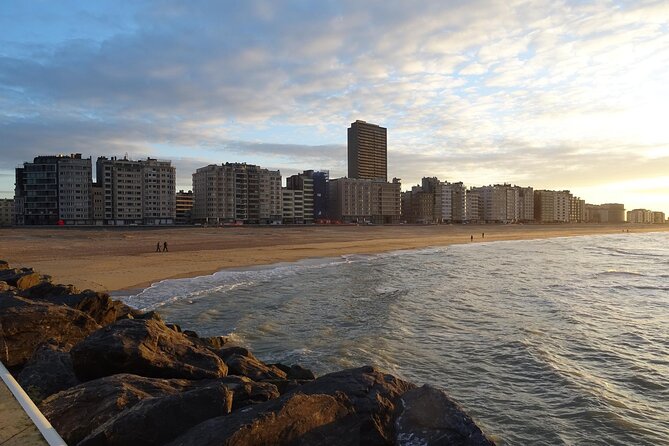
Ostend is the kind of city where a normal sightseeing plan can feel either too tight or too random. This experience solves that problem by turning your walk into a structured game, without turning it into a tour with a countdown.
You’re not chasing a guide. You’re not waiting for stragglers. Instead, you follow prompts on your phone, go to the next place, and solve what’s needed there. That alone is a big deal, especially if you like to wander into side streets or stop to people-watch like any proper seaside town deserves.
What makes it especially good value is the format. You pay for a group activity, then you get a long enough route to feel like you actually saw a meaningful chunk of Ostend, including famous landmarks and a stretch of coastline.
More Scavenger Hunts & Escape Games in Ghent
- e-Scavenger hunt Ghent: Explore the city at your own pace
★ 4.5 · 41 reviews - Discover Ostend while playing! Escape game – The Walter case
★ 4.0 · 16 reviews - e-Scavenger hunt Kortrijk: Explore the city at your own pace
★ 4.5 · 15 reviews
Price and time: what $37.33 per group really buys you
The price is $37.33 per group up to 6 people. If you’re going as a pair, you’re effectively paying about $18.67 per person. If you bring a full group of six, it drops to a little over $6 per person. That difference is why this kind of hunt works so well with friends and families.
The duration is 2 to 4 hours. In practice, that means you can finish during a light afternoon window, but you can also slow down if you want more photos, more reading on the phone, or a longer seaside break.
You also control the tempo. If the sky is beautiful, you can lean into the beach and pier. If the weather is less friendly, you can keep it tight around the indoor-friendly stops like churches and the Kursaal area.
Before you go: phone power, data, and a start that fits your day
This is an online game and city walk. That means you need a smartphone and enough data to access the game.
What I’d treat as non-negotiable is battery life. One common problem that can spoil the fun is realizing your phone is low right when you’re mid-route. When that happens, you lose the game flow. Even if everything else is correct, you’re stuck until your device can keep running.
My practical advice:
- Bring a power bank.
- Keep your phone charged from the moment you start, not after.
- If you tend to rely on map screens, have a backup plan like Google Maps ready so you can find each spot quickly.
The good news is that the experience is open every day within a long daily window, so you can start when your day actually allows. That flexibility is great if you’re doing other things first, like lunch or a morning visit to the harbor area.
Following the route: from Ostend Station to the Mercator ship

Your hunt begins at Ostend Station, Natiënkaai 1, 8400 Oostende. From there, the early theme is easy orientation. You’re in the heart of where travelers naturally start anyway, near the harbor and the central town area.
More self-guided hunts and city games in Ghent:
- Discover Mons while playing! Escape game – The alchemist
★ 4.0 · 5 reviews - Discover Ghent while playing! Escape game – The Walter case
★ 4.5 · 4 reviews - e-Scavenger hunt Mons: Explore the city at your own pace
★ 5.0 · 4 reviews - Discover Ghent while playing! Escape game – The alchemist
★ 4.0 · 4 reviews
Stop: Protected sailing ship Mercator (harbor near station and town hall)
One of the strongest “get oriented fast” anchors is the Mercator, a protected sailing ship that’s been moored in Ostend for decades. It’s right where you’d expect to pass anyway if you’re walking from the station toward the center.
Why this works in a game: it’s visually distinctive and gives you an early win. When the first stop is memorable, the whole hunt feels smoother, because you’re already in the right frame of mind.
Small drawback to consider: since it’s a famous site, it can also be busy depending on the time of day. Still, that’s more of a normal seaside-city reality than a problem with the activity.
Churches and seaside icons: the Ensor stops and the main church

After Mercator, the route leans into Ostend’s identity: architecture, artists, and the stories tied to coastal life.
Stop: Church of Saint Peter and Saint Paul
This is the main church of Ostend, a Roman Catholic Neo-Gothic building constructed on the ashes of an earlier church. That “built on what came before” detail gives you a natural reason to look closer at the structure rather than just pass by.
Game advantage: churches often make good puzzle locations because they’re fixed, obvious, and easy to confirm you’re in the right spot.
Potential consideration: it’s a church. If you plan to be inside, be mindful of normal visitor rules you might find there, even if the hunt is self-guided.
Stop: Discover Ensor at the renovated James Ensor House
If you want to feel how art can shape a seaside town, this stop does the job. The James Ensor House connects directly to James Ensor, and the hunt encourages you to linger in the atmosphere rather than rushing past.
What I like about this kind of art stop in a scavenger format is that you don’t just read a plaque. You’re prompted to look, which makes the experience more personal, even if you’re not an art specialist.
Stop: Red sculptures by Arne Quinze on Zeeheldenplein
Next comes something very “Ostend now.” The red monumental sculptures by Arne Quinze on Zeeheldenplein are designed to catch your attention from a distance. In a puzzle route, that matters because it makes navigation easier and makes the hunt feel less like you’re searching for tiny details.
Stop: The small barok fishermen and seamen church
This stop is described as a small, two-isle barok church in the town center, linked to Capuchin monks who worked among fishermen. Later, it became the fishermen and seamen church in Ostend.
I like how the hunt builds in local life themes. This is not just about architecture. It’s about how coastal communities organized around work, faith, and the rhythms of the sea.
The pier, Kursaal, and the promenade statues
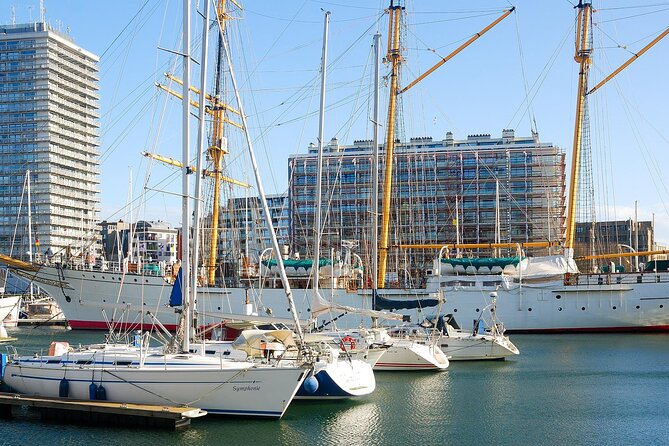
Now the route turns toward the coastline energy. This is where you feel like you’re on a real seaside walk, not just a city loop.
Stop: The 300 m pier segment for skyline views
The hunt includes the longest pier of the coast from 2019, with a 300 m walk to the end. That’s a real time commitment in a self-guided format, but it’s also one of the most memorable parts because it changes your perspective.
Practical tip: plan your pier walk with your phone comfort in mind. If you’re the type who likes to check the puzzle screen every time you walk, bring a way to keep your device protected.
Stop: Casino-Kursaal (Kursaal Oostende)
The Kursaal Oostende is a kursaal in the Belgian seaside resort of Ostend, built in 1950, and made of white Portland stone. Even if you’re not a serious architecture person, you can appreciate the clean, solid presence of a building like this in the context of the seaside promenade.
This stop also gives you a natural “pause” point. The hunt can feel like brisk walking, so buildings like this help you reset.
Stop: Bronze equestrian statue of King Leopold I on the Albert 1 promenade
The hunt continues with a bronze equestrian statue of King Leopold I located on the dike of Ostend on the Albert 1 promenade. It’s one of those landmarks that helps you understand the city’s history through physical form.
In a game, statues are also useful because you can confirm location quickly. That saves time when you’re trying to keep the route smooth.
Heilig Hartkerk and modern public art with the sea in mind
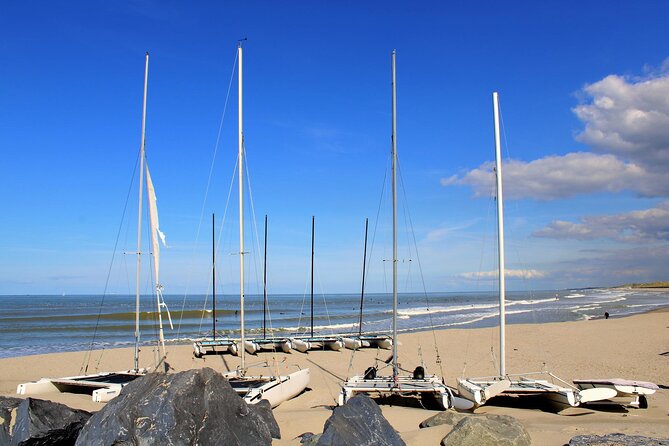
Later in the route, you shift from classic landmarks into the kind of modern public art and church presence that makes Ostend feel layered.
Stop: Heilig Hartkerk in Westerkwartier
The Heilig Hartkerk is a parish church located on Heilig Hartplein in the Oostend district of Westerkwartier. The hunt treats it like a meaningful waypoint, not just another stop along the way.
Stop: Patrick Steen sea-and-dancing sculpture on the boulevard
This next element is by artist Patrick Steen and features life-size figures showing the fusion of two dancing people with waves of the sea.
This is one of the stops where I think the “game” format helps most. When a sight is abstract or symbolic, reading a small prompt often turns it from something you notice once into something you actually process.
End with downtime: beach time and water activity options

The final part of the experience is intentionally open. The route leads you toward the beach, and the idea is simple: take your win, breathe the sea air, and enjoy the coast at a pace that makes sense for your day.
You might want a sunbath or a walk on the beach, or you might choose to do water sports if that’s your thing. The hunt doesn’t force you into an athletic plan. It just gives you permission to switch from puzzle mode to vacation mode.
What I’d expect from the puzzles (and why it suits families)
This kind of e-scavenger hunt is built around quick discovery. You arrive at a place, you use the phone to answer the prompt, and the answer is tied to what you can see right there.
That’s why it tends to work so well for families and mixed groups. It turns “stop reading and look around” into a game you can do while still sightseeing.
A couple practical considerations based on how people experience the hunt:
- The route is described as easy to follow, and the answers can often be found at the spot.
- If you already know Ostend well, it may feel a bit too easy and more like a fun walk than a serious challenge.
- If your phone screen is hard to manage, you might need to use GPS or Google Maps to help you get to the right spot fast.
- The hunt can be done in a flexible question order, which is nice, but if you lose your place, you may have to walk back to find what you need.
Also, the game is in English. In any self-guided translation system, you can occasionally run into minor wording quirks. If you notice repeated sentences or small translation glitches, don’t treat them as a big issue. The overall value is in the places you visit and the rhythm of the walk.
Who should book this e-scavenger hunt?
This hunt is a strong fit if you want:
- A fun city discovery activity without the hours of planning
- A route that feels self-paced so you can stop for snacks and photos
- A way to see key Ostend sights on foot, including the pier walk
It’s especially good for first-time visitors who want a solid introduction without overthinking logistics. It’s also a great choice if you’re traveling with kids, since the game format keeps attention on the streets and landmarks.
I’d think twice if:
- You hate being tied to your smartphone for an extended walk
- You know your phone battery is unreliable
- Your group prefers guided narration with lots of context
Should you book e-Scavenger hunt Ostend?
Yes, if you like structured wandering. For $37.33 per group up to 6, you’re buying a flexible half-day of sightseeing with a built-in reason to look at the city, not just pass it by.
Book it if you want Mercator, Saint Peter and Saint Paul, the Ensor connection, the red Arne Quinze sculptures, a pier walk, the Kursaal, and public art like Patrick Steen, all without scheduling a tour meeting time and then rushing to keep up.
Skip it if your travel style is purely “walk freely and read nothing.” This experience works because the phone prompts do some of the thinking for you. If you don’t want that, you might prefer a simple self-guided walking route instead.
FAQ
How much does the e-Scavenger hunt cost?
It costs $37.33 per group, up to 6 people.
How long does the experience take?
Plan on about 2 to 4 hours.
What language is the mobile game available in?
It’s offered in English.
Do I need to bring a smartphone?
Yes. A smartphone and data are not included, but the hunt uses a mobile ticket and an online game on your phone.
Where do I start and where does it end?
You start at Ostend Station, Natiënkaai 1, 8400 Oostende, Belgium. The activity ends back at the same meeting point.
Can I start at any time?
There’s no fixed schedule, and the activity shows open daily hours from 12:00 AM to 11:59 PM.
The latest Ghent write-ups
- Walking Food Tour in Ghent★ 5.0 · 13 reviews
- Ghent Walking Tour with Audioguide on Your Smartphone★ 4.5 · 13 reviews
- Discover Ghent while playing! Escape game – The Walter case★ 4.5 · 4 reviews
- Discover Mons while playing! Escape game – The alchemist★ 4.0 · 5 reviews
- Sunset cruise★ 5.0 · 19 reviews
- e-Scavenger hunt Mons: Explore the city at your own pace★ 5.0 · 4 reviews
- Discover Ghent while playing! Escape game – The alchemist★ 4.0 · 4 reviews
- Private Hidden Gems Walking Tour in Ghent★ 5.0 · 12 reviews
Scavenger Hunts & Escape Games, compared.


e-Scavenger hunt Antwerp: Explore the city at your own pace
Read our review →
e-Scavenger hunt Bruges: Explore the city at your own pace
Read our review →
Bruges Scavenger Hunt and Highlights Self Guided Audio Tour
Read our review →
e-Scavenger hunt Ghent: Explore the city at your own pace
Read our review →
Beer Tasting and Scavenger Hunt in Brussels – About 3 Hours
Read our review →
e-Scavenger hunt Mechelen: Explore the city at your own pace
Read our review →
Romantic Bruges: Love Between the Canals Exploration Game
Read our review →Browse the lists this tour appears in